Emergency Plumbing Help in Dallas–Fort Worth
Burst pipe, active leak, sewer backup or a drain that will not stop overflowing? Describe what is happening on the phone and find out what help is available near you right now.
Call 24/7 to request plumbing help.
- Calls accepted 24/7Call lines are available at any hour, any day. Answer times may vary.
- Selected communitiesCoverage is checked by location on the call before anything is scheduled.
- Common household problemsLeaks, drains, sewer lines, water heaters, toilets and fixtures.
- Scope and pricing firstDiscuss the work and the price with the provider before authorizing anything.
Plumbing Emergencies We Can Help With
Tell us what is happening in the home and we can check what help is available in the Dallas–Fort Worth area.
Burst or Leaking Pipes
A split supply line or a pipe spraying behind a wall. Shut off the water if you can, then call.
Major Active Water Leaks
Water pooling on floors, running down walls or coming through a ceiling.
Overflowing or Backed-Up Drains
Sinks, tubs or floor drains pushing water back into the home instead of draining.
Sewer Backups
Waste water backing up through the lowest drains, often with odor, after heavy use or rain.
Loss of Normal Plumbing Function
No usable toilet, no running water or fixtures you cannot safely use right now.
Problems Needing Prompt Attention
A leaking water heater tank, a stuck shutoff valve or damage that is getting worse by the hour.
When to Call Right Away
Some plumbing problems can wait for a scheduled visit. These usually cannot, because water keeps moving and damage keeps spreading.
- Water is running and you cannot stop it at the fixture or the main shutoff.
- Waste water is backing up into a tub, shower or floor drain.
- You hear water running inside a wall or hear a hissing pipe.
- A ceiling, wall or floor is staining, sagging or feeling wet.
- The only toilet in the home is unusable.
- The water heater is leaking from the tank rather than a fitting.
What to Do Right Now
- 1Shut off the nearest fixture valve or the main water supply when it is safe to do so.
- 2Keep people and pets away from sewage or contaminated water.
- 3Do not touch electrical devices, outlets or panels near standing water.
- 4If you suspect a gas leak, leave the property and contact emergency services or the gas utility.
- 5Call and explain the symptoms and the location in the home.
Do not attempt repairs you are not comfortable with. Describe what you are seeing on the call instead.
Why Plumbing Fails in Dallas–Fort Worth Homes
North Texas soil and weather put unusual stress on residential plumbing. These are possible contributing factors, not a diagnosis — the cause is confirmed on site.
- Expansive clay soil that swells and shrinks with moisture, moving whatever is buried in it.
- Foundation movement that can stress supply and drain lines running under a slab.
- Slab-leak warning signs such as a warm spot on the floor, a running meter or a jump in usage.
- Freeze and thaw damage to hose bibbs, exposed lines and unheated wall cavities.
- Extreme summer heat and heavy irrigation demand on main water lines.
- Hard-water buildup in fixtures, valves and water heaters.
Dallas–Fort Worth Areas Covered
Plumbing help is available for residents across the Dallas–Fort Worth metroplex, including Dallas, Fort Worth, Arlington and surrounding communities. Availability varies by location and time.
- Dallas
- Fort Worth
- Arlington
- Surrounding communities
How It Works
- 1Call and describe the plumbing problem.
- 2Provide the property location so service availability can be checked.
- 3Discuss the proposed scope, provider credentials, pricing and terms before authorizing work.
More Plumbing Help in Dallas–Fort Worth
- Water leak & pipe repairLeaks rarely stay small. Describe the signs you have noticed and we can check what help is available nearby.
- Drain cleaning & sewer helpA single slow drain and a whole-house backup are very different jobs. Describe what you are seeing on the call.
- All plumbing servicesNot sure which category your problem falls under? Describe it on the phone and we can point the call in the right direction.
- Water heater repair & installationRepairs, straight replacements and new installations — tank or tankless, gas or electric. Describe the unit on the call.
- Toilets, faucets & shower valvesToilet repair service and toilet installation service, faucet repair and faucet replacement service, plus shower valve repair — small jobs included.
- Dallas–Fort Worth plumbing helpStart with the main Dallas–Fort Worth page for any plumbing problem.
Frequently Asked Questions
Confirm pricing, service details and the scope of work directly with the plumbing professional before work begins.
Water still appearing after a shutoff
When you call, describe what changed after isolation, not just that the valve is closed.
A slowing drip and sustained flow are different observations
Water already held in a pipe, appliance, ceiling, or cavity may continue draining after a supply is isolated. A decreasing trickle is useful information, but it does not prove that the correct valve was used or that the source has stopped.
A steady stream may mean the affected supply remains pressurized, another source feeds the area, or stored water is still escaping. Do not cycle valves to distinguish these possibilities, especially if access is wet or the valve resists movement.
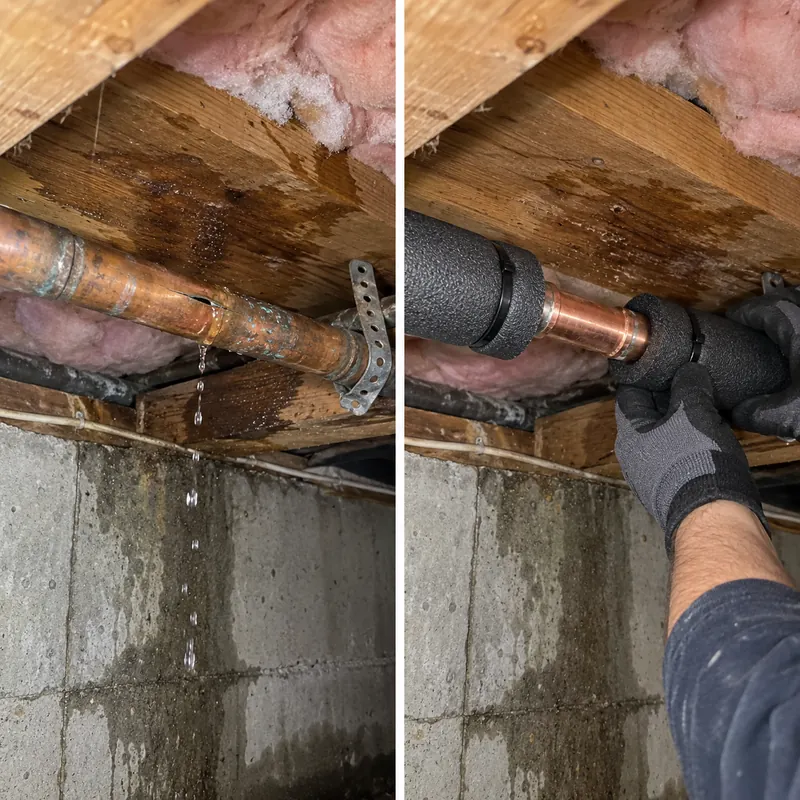
Report the change and the remaining hazard
From a dry safe position, note whether flow became weaker, stayed the same, or increased, and approximately when the known valve was used. Describe which fixture or property section that valve is believed to serve.
Keep clear of wet electricity and unstable ceilings. Ask how the source and safe isolation will be confirmed before repair; water still spreading takes priority over collecting photographs.
- Which known valve was operated, and when?
- Is the visible flow decreasing or sustained?
- Are occupied rooms, ceilings, or electrical equipment affected?
Plumbing Emergency in Dallas–Fort Worth?
Call 24/7 to describe the problem and check current service availability.