Burst Pipe: Safe First Steps
By The Quick Fix Plumbing
An active pipe leak calls for containment only when it is safe. Do not cross standing water, reach near electricity, or stand beneath a sagging ceiling to find a shutoff.
Safety comes before the valve
Keep people away from wet electrical equipment, unstable ceilings, and rapidly accumulating water. If there is immediate danger, leave the affected area and contact emergency services or the appropriate utility from a safe location. A plumbing call cannot make that area safe by itself.
If you know the property water shutoff and can reach it safely, isolate the supply only if the valve operates normally. Do not force an unfamiliar or stuck valve. Shared-building shutoffs may affect other residents and require management authorization.
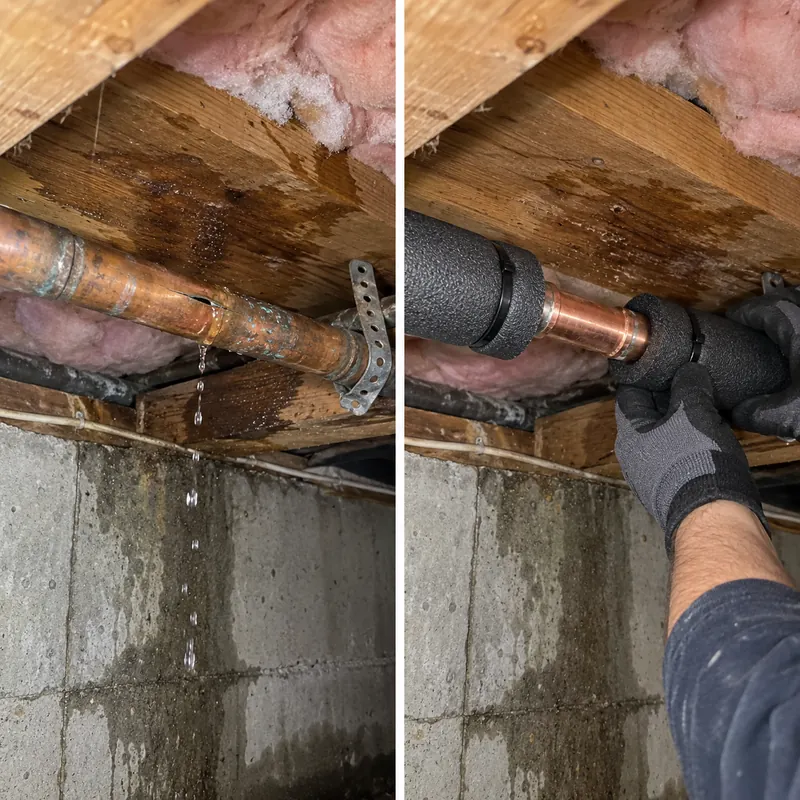
Do not turn suspected freezing into a heat repair
If an exposed or unheated-area pipe may be frozen, do not use a flame. A damaged pipe may leak as ice changes, and the affected section may be hidden. Safe access, isolation, and professional assessment matter more than guessing where the split is.
Do not open walls, climb into a wet crawlspace, or handle electrical equipment to trace a leak. The illustration shows accessible pipework; it does not mean your leak is similarly accessible or has the same cause.
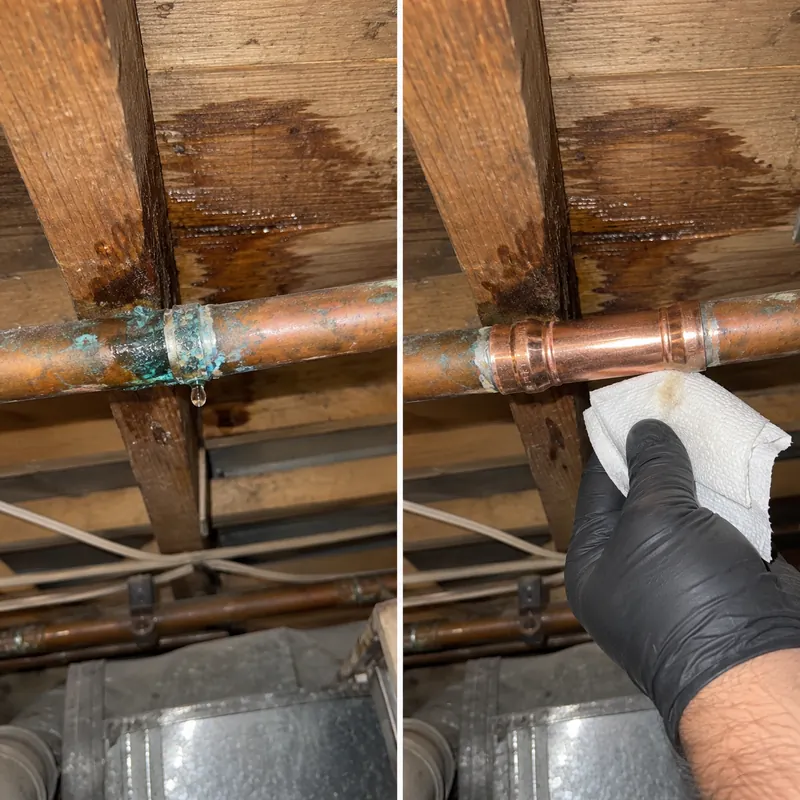
Document what you can see safely
From a dry safe position, note when water was first seen, where it appears to originate, and whether a shutoff changed the flow. Take photos only without entering the hazard area. Record damaged rooms or items without moving contaminated or electrically unsafe equipment.
A whole-property loss of supply, water emerging in a public street, or several nearby properties affected may require a utility report. A visible indoor pipe leak is a different observation. Local responsibility rules vary: describe the facts rather than deciding ownership from a general guide.
- Active leak location and whether water is still spreading
- Safely accessible shutoff and result if used
- Electrical, ceiling, shared-access, or occupancy hazards
- Address/ZIP and who can authorize access and work
Related plumbing questions
Sources and equipment instructions
These references support the specific observations and safety boundaries discussed above. Use the manual for your actual equipment; utility ownership and contact rules apply only in that utility’s area.
Calls accepted 24/7. Discuss scheduling, scope, and price before authorizing work.