Why Is the Hot Water Running Out?
By The Quick Fix Plumbing
Less usable hot water can reflect demand, a fixture mixing issue, or equipment trouble. The first question is whether the change affects the whole property or only one outlet—not whether noise proves sediment.
Compare use patterns before choosing a repair
Note whether showers overlap with laundry or dishwashing, whether more people are using hot water, and whether the symptom appears after a long draw. A recent change in demand matters even if the equipment has not changed.
If other outlets remain hot while one shower turns lukewarm, that fixture or its mixing control may need assessment. Compare what you have already noticed during ordinary use; do not deliberately run scalding water or repeatedly change heater settings.
| Pattern | Useful discussion |
|---|---|
| All outlets cool sooner than before | Equipment output, recovery, demand, and recent changes |
| Only one shower loses warmth | Fixture mixing or valve behavior as well as supply |
| Reduced output after overlapping use | Capacity and recovery versus the actual demand pattern |
Noise and component appearance are not a full diagnosis
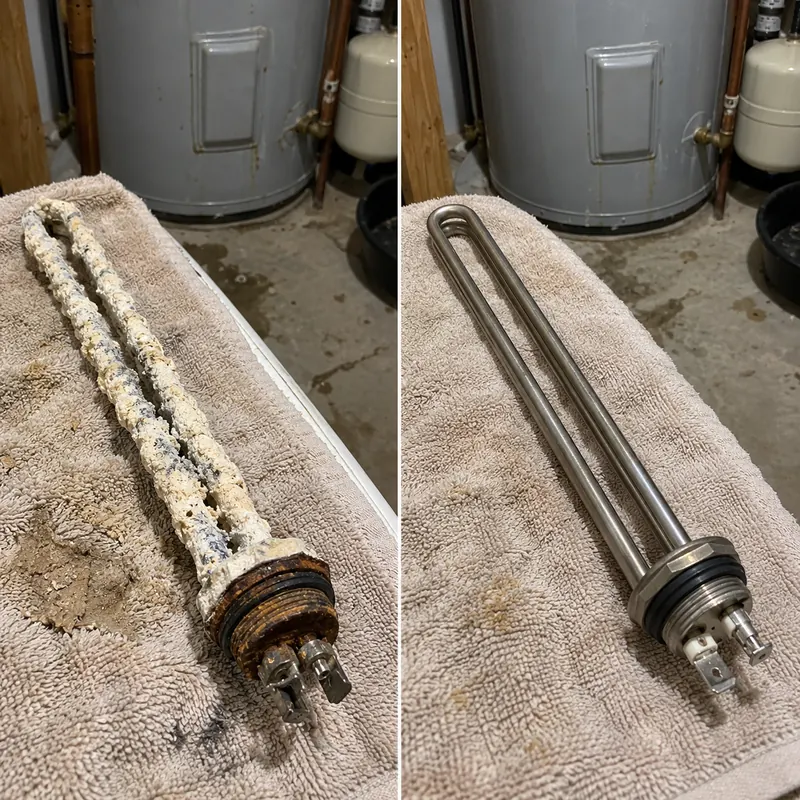
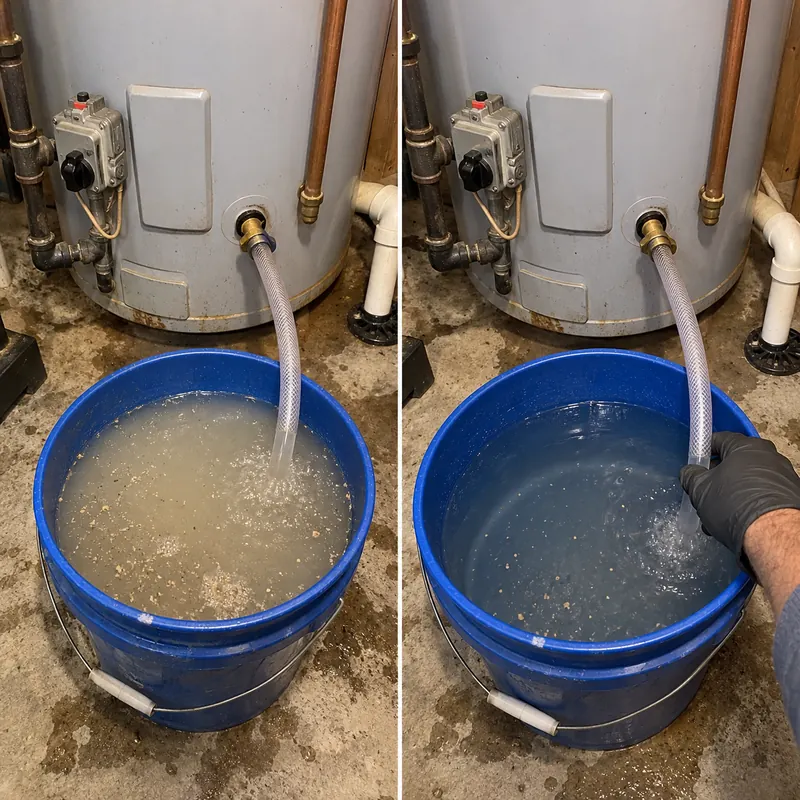
Sediment can be relevant to some storage heaters, but noise alone does not prove buildup is the cause. Electric elements, controls, mixing components, and other faults can also affect output. Do not open electrical covers, probe wiring, or repeatedly reset a tripping breaker.
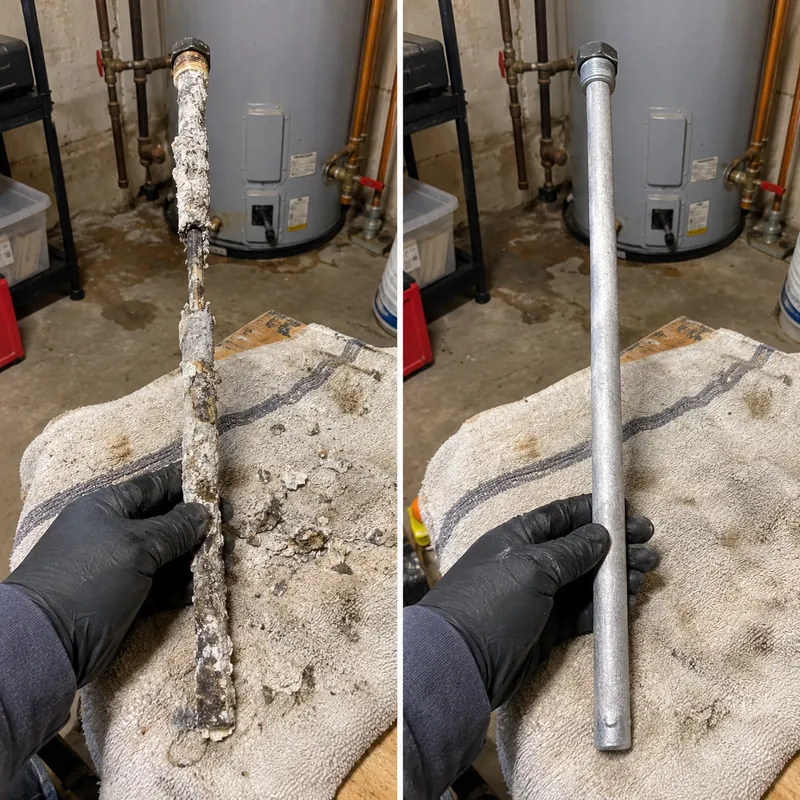
The element and anode comparisons here illustrate components a professional may inspect. An anode relates to tank corrosion protection; replacing it is not a universal cure for poor hot-water delivery. Inspection and maintenance depend on the specific model and condition.
Discuss maintenance in the context of the manual
Share the model, equipment type, visible error messages, and any maintenance records. Ask whether inspection supports maintenance, repair, or a capacity discussion. Flushing is not an automatic safe DIY step for every heater or every valve condition.
For storage heaters, tank capacity and first-hour delivery describe different things: stored volume is not the full amount the heater may supply during a high-demand hour. Ask how the actual household pattern compares with the rated performance. Tankless and heat-pump equipment have their own operating considerations.
- Whole property or one outlet?
- When during use does the temperature drop?
- Any changes in use, controls, or maintenance?
- Model/type and safely visible error display?
Related plumbing questions
Sources and equipment instructions
These references support the specific observations and safety boundaries discussed above. Use the manual for your actual equipment; utility ownership and contact rules apply only in that utility’s area.
Calls accepted 24/7. Discuss scheduling, scope, and price before authorizing work.