Water Heater: Repair or Replace?
By The Quick Fix Plumbing
A useful decision starts with what failed and what each proposal includes. Equipment age, a puddle, or an unfamiliar noise alone does not establish that replacement is necessary.
Ask what has actually been diagnosed
A leaking connection, control problem, or replaceable valve is different from confirmed tank failure. Ask where the source was found, what checks support the diagnosis, and whether other conditions affect safe operation.
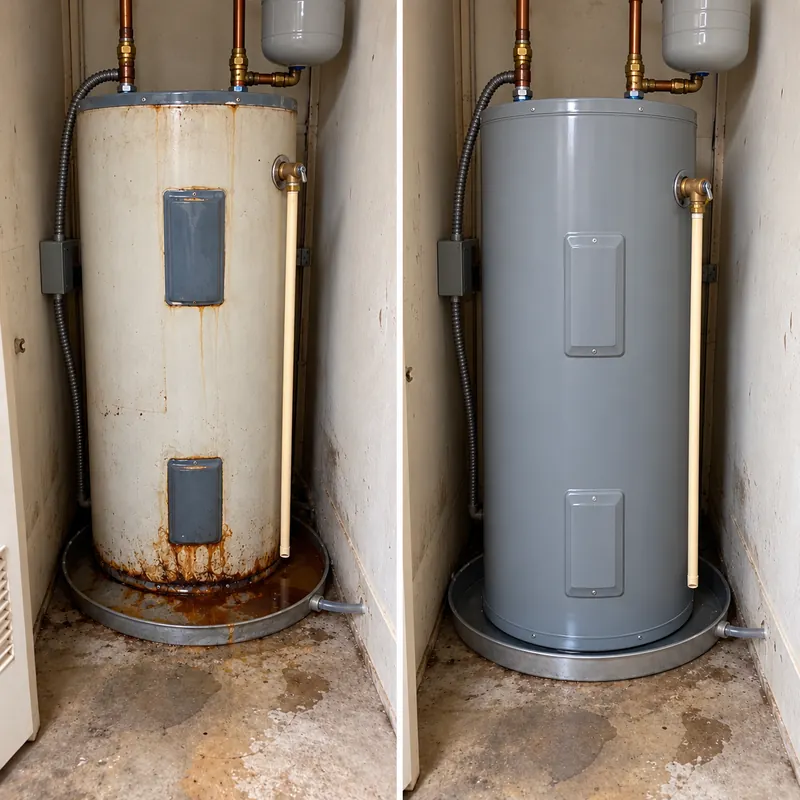
Condition and service history matter, but no fixed lifespan predicts the result for every heater. If a component repair is possible, ask what it resolves and what it cannot establish about the rest of the equipment. If replacement is proposed, ask why repair is unsuitable for the identified fault.
Compare scope, not just the headline amount
Ask for a written description of equipment, labor, removal, connections, and any required installation changes. Clarify whether permits or inspections apply to the proposed work and who will handle them. Do not assume every proposal includes the same tasks.
Warranty coverage is model- and situation-specific. Ask about remaining manufacturer coverage, documentation needed for a claim, and any separate labor or workmanship terms. Do not treat a warranty as proof that every cost is included.
| Decision point | Question to ask |
|---|---|
| Repair | Which confirmed fault is addressed and how will operation be checked? |
| Replacement | Why is replacement warranted, and what installation work is included? |
| Warranty | Which parts, labor, exclusions, and claim steps apply? |
| Extra work | How will additional findings and price changes be authorized? |
Match the equipment to actual demand and access
Describe hot-water use, overlapping showers or appliances, available space, and the current equipment type. A larger tank is not automatically the right answer; rated delivery, recovery, energy source, and installation constraints need consideration.
Do not disconnect gas, open electrical equipment, drain a hot tank, or bypass safety devices while comparing options. The professional should explain safe isolation and installation checks. Keep the relief outlet unobstructed at all times.
- Model and safely visible label details
- Fault findings and existing maintenance or warranty records
- Typical demand and overlapping use
- Written repair/replacement scope, exclusions, and approval process
Related plumbing questions
Sources and equipment instructions
These references support the specific observations and safety boundaries discussed above. Use the manual for your actual equipment; utility ownership and contact rules apply only in that utility’s area.
Calls accepted 24/7. Discuss scheduling, scope, and price before authorizing work.