Where Is the Water Heater Leaking?
By The Quick Fix Plumbing
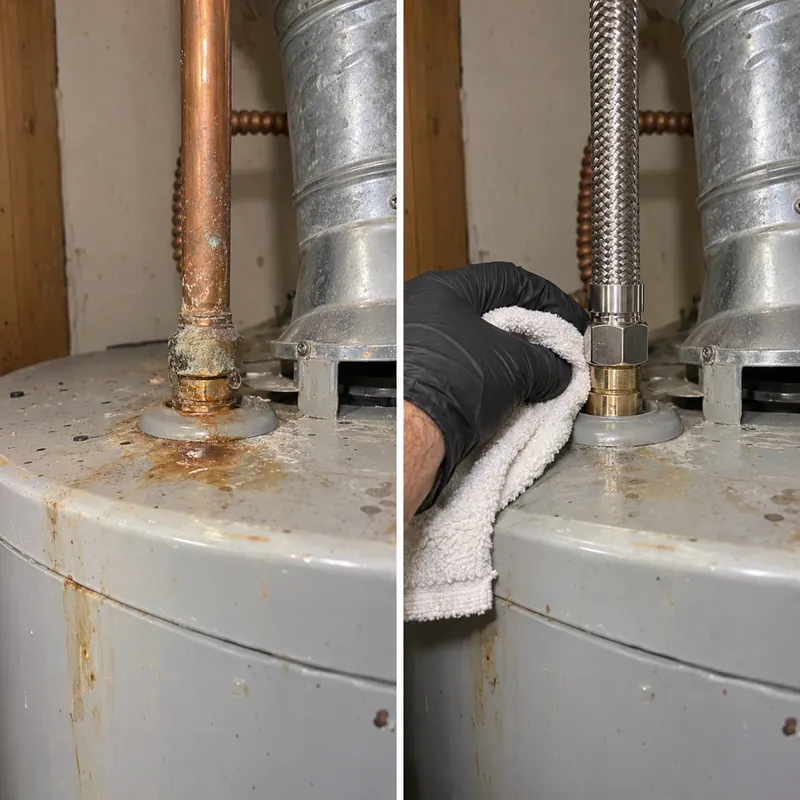
Water around a heater is not automatically a leaking tank. Connections, valves, relief discharge, condensation, and nearby plumbing can put water in the same place. The highest visible wet point is a useful starting observation.
Look from outside the hazard area
Record whether visible moisture begins at a top connection, side connection, drain valve, relief discharge outlet, or the tank body. Water can track down insulation or piping before reaching the floor. Do not remove a jacket, access cover, or insulation to find the source.
Water may be hot. Keep clear of wet electrical equipment, exposed wiring, and hot discharge. If you smell gas or suspect an immediate danger, leave the area and contact the appropriate emergency service or gas utility from a safe location. A plumbing intake call is not a substitute for emergency response.
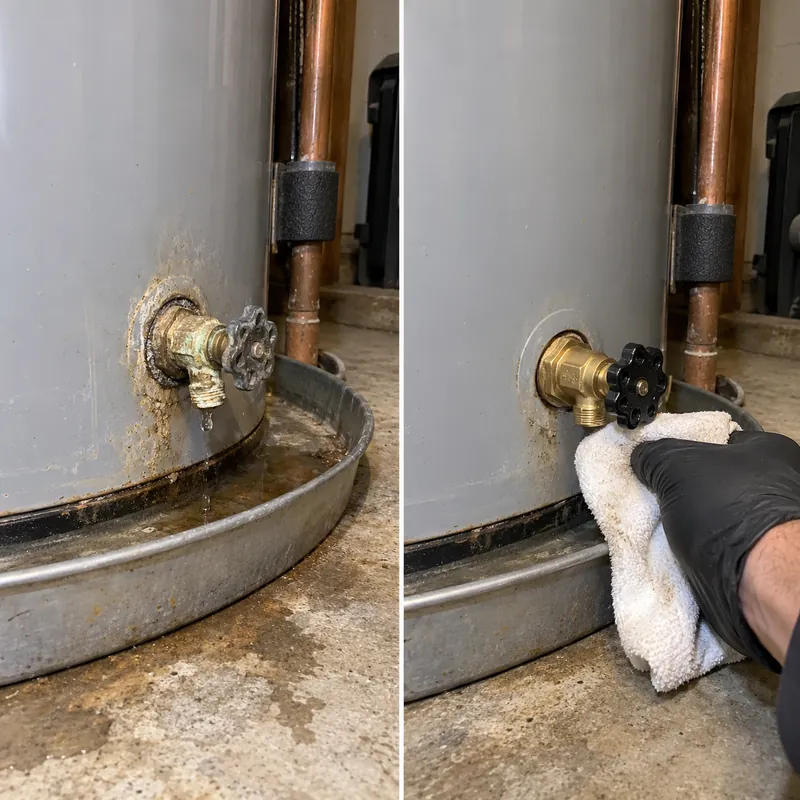
A valve leak is different from a tank diagnosis
Moisture at the drain valve can involve the valve, its outlet, or water coming from above. Do not turn an unfamiliar drain valve or attempt to tighten it while the heater is operating. Report whether a hose is connected and whether maintenance recently occurred.
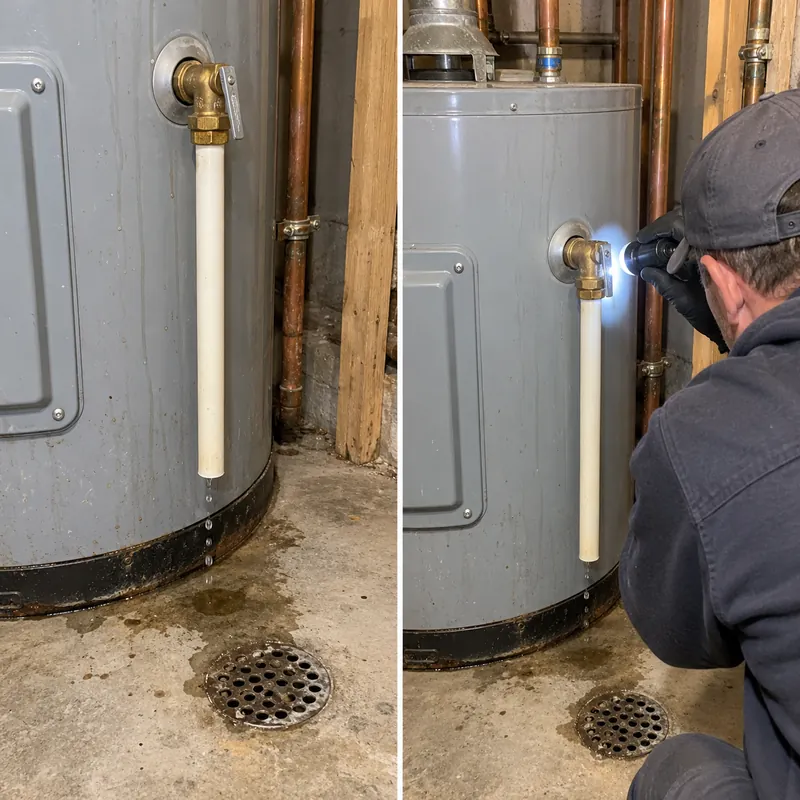
Relief discharge is a safety signal that needs assessment. Never cap, plug, clamp, or obstruct the relief outlet or discharge pipe. Do not lift its lever as a casual test. Follow the actual model manual and have a qualified professional assess the cause and safe installation.
Prepare model and location information
If the label is safely visible, record the model, type, and any error message without opening equipment. Describe how much water is visible, whether it is increasing, and whether nearby piping is also wet. Do not infer a tank failure from a puddle alone.
Ask how the source will be distinguished from replaceable connections and how safe water and energy isolation will be handled. Do not perform gas work, open electrical covers, or repeatedly reset a breaker to keep the heater running.
- Highest visible wet point and whether water is increasing
- Tank, tankless, electric, gas, or heat-pump model if known
- Recent maintenance or unusual discharge
- Electrical, gas, hot-water, or access hazards
Related plumbing questions
Sources and equipment instructions
These references support the specific observations and safety boundaries discussed above. Use the manual for your actual equipment; utility ownership and contact rules apply only in that utility’s area.
Calls accepted 24/7. Discuss scheduling, scope, and price before authorizing work.