Why Does the Kitchen Sink Keep Blocking?
By The Quick Fix Plumbing
A sink that clears briefly and blocks again needs a history, not a guess. Grease and food deposits can contribute to restrictions, but symptoms do not tell you whether the problem is in the trap, a branch, or a shared line.
Temporary flow is not a condition report
Water may find a narrow path through buildup after an attempted clearing. That can improve drainage without removing the full obstruction. The interval before the next blockage and the amount of water involved help explain the pattern.
Do not assume an older-looking pipe must be replaced. Material, accessible condition, cleaning results, and inspection findings matter more than appearance alone. The illustrative pipe comparison below is not a recommendation to replace your drain.
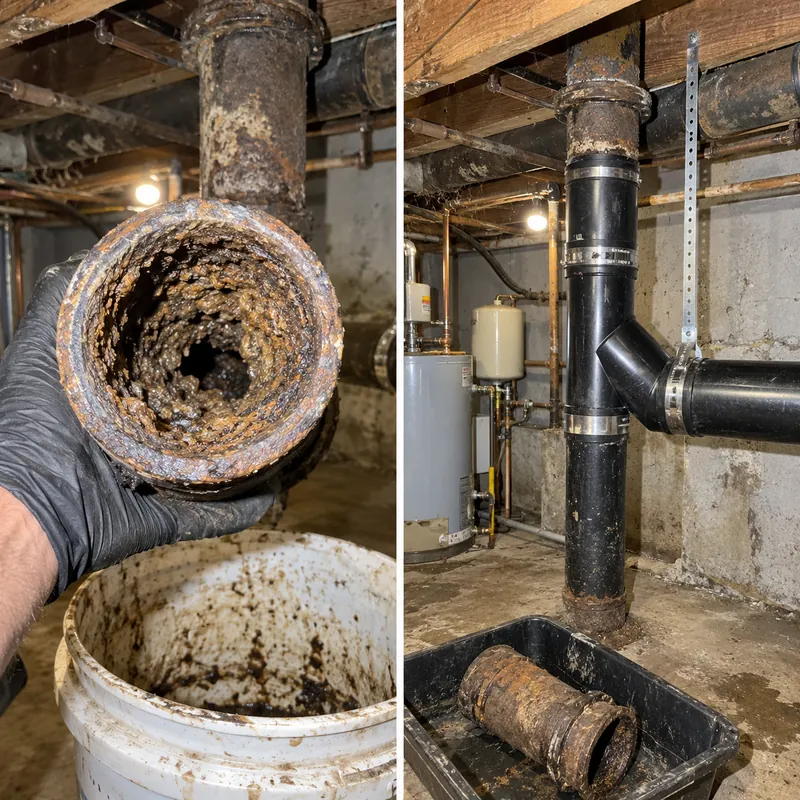
Separate the sink from the wider drainage system
Note whether one bowl, both bowls, or a nearby fixture are affected. Dishwasher discharge arriving in a backed-up sink can be important information; avoid running the appliance again while water is not draining.
A problem confined to the kitchen differs from wastewater appearing at a shower or other low drain. If other fixtures cause a backup, stop unnecessary water use and describe the connected pattern. Do not open a sewer cleanout or remove a trap containing unknown chemicals.
| Pattern | Question to discuss |
|---|---|
| Sink alone repeatedly slows | Where along the kitchen branch is the restriction? |
| Dishwasher discharge returns into sink | Is drainage restricted, and does the appliance connection need checking? |
| Several rooms back up | Could a shared drain be involved? |
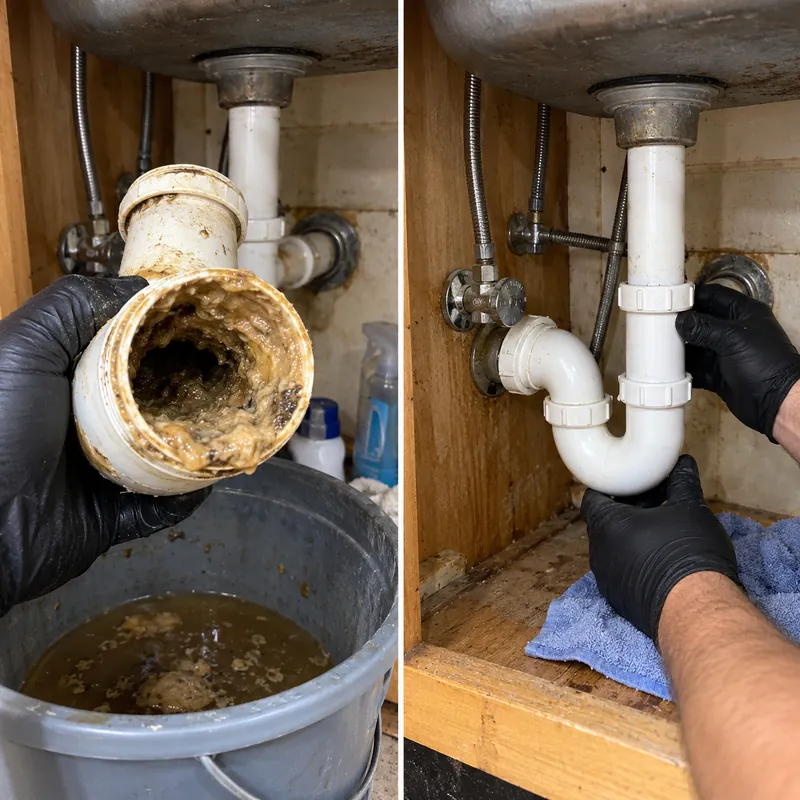
Prepare a useful cleaning request
Tell the professional what you usually put down the sink, whether a disposer is present, and what changed before the blockage. Avoid sending grease or food solids down the drain while arranging assessment.
Ask what the proposed cleaning can reach, how normal drainage will be checked, and what would justify a camera inspection. If inspection is recommended, ask for the observed findings and limitations before discussing a replacement scope.
- First occurrence or a repeat after earlier work?
- Which sink bowls and nearby fixtures are affected?
- Any chemical cleaner already added?
- Any recent disposer, dishwasher, or cabinet plumbing changes?
Related plumbing questions
Sources and equipment instructions
These references support the specific observations and safety boundaries discussed above. Use the manual for your actual equipment; utility ownership and contact rules apply only in that utility’s area.
Calls accepted 24/7. Discuss scheduling, scope, and price before authorizing work.