What to Ask About Recurring Sewer Backups
By The Quick Fix Plumbing
Recurring wastewater backups need assessment of the shared drainage path. Roots are one possible restriction, not a diagnosis you can make from gurgling, odor, or water returning at a floor drain.
Stop adding water during an active backup
Stop using sinks, showers, toilets, washing machines, and dishwashers that may feed the affected line. Repeated flushing can add wastewater to an already restricted system. Keep people and pets away from sewage and do not handle contaminated belongings unprotected.
Do not open a sewer cleanout: wastewater may be under pressure or release suddenly. If water is near electrical equipment, stay out of the area. A dangerous flooding situation is not an opportunity to test one more fixture.
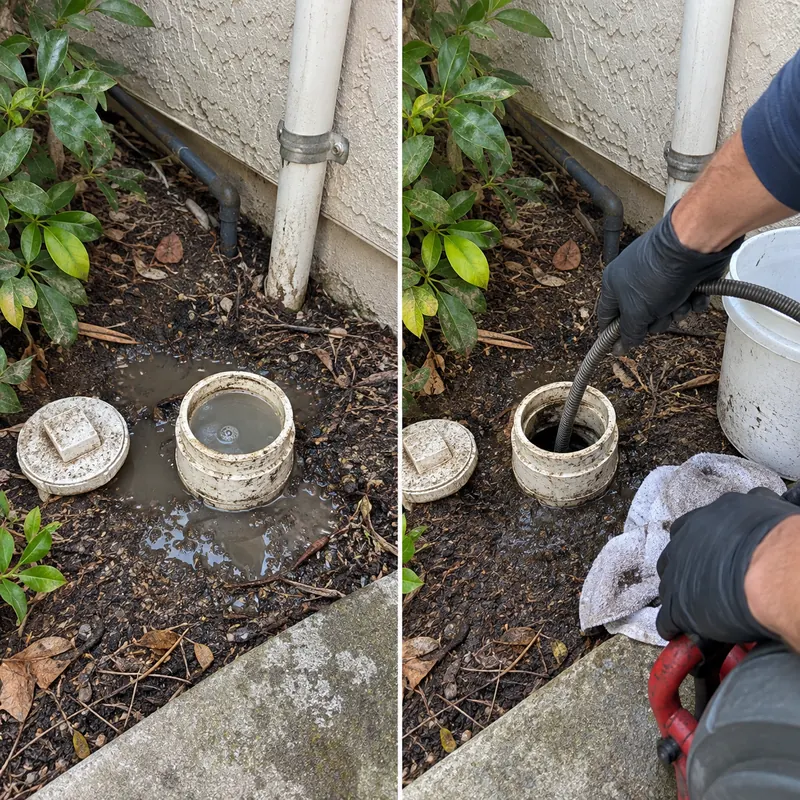
Cleaning and inspection answer different questions
Cleaning aims to restore a drainage path or remove a restriction. A camera inspection can record visible conditions inside an accessible line, such as roots, deposits, standing water, or damaged joints. A camera does not automatically explain the cause of every symptom or establish all buried pipe conditions.
Visibility depends on access, water, debris, and how far the equipment can travel. Ask whether cleaning is needed before useful inspection, whether the full relevant section was viewed, and whether the recording identifies where a finding is located. A visible root entry may require a different discussion from ordinary removable buildup.
| Proposed step | Clarification to request |
|---|---|
| Drain cleaning | What restriction is being removed, and how will flow be checked? |
| Camera inspection | What length is visible, and what remains unviewed? |
| Repair proposal | Which recorded finding supports this repair and location? |
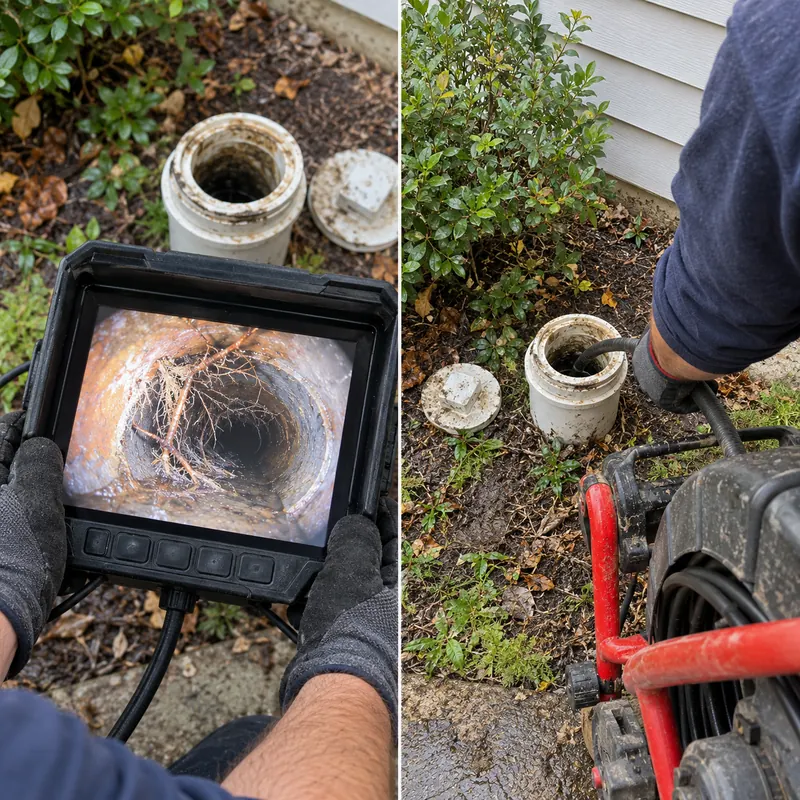
Build a timeline rather than a cause theory
Record which fixture first showed water, which other fixtures were in use, and whether an earlier clearing helped. Note any prior inspection or repair records you can share. Do not assume tree roots are present because there are trees nearby.
If several properties or a public area appear affected, report what you observed to the appropriate local utility as well. Ownership and reporting rules differ by location; a utility source from another city does not establish who owns your line.
- First affected fixture and highest visible water level
- Other fixtures or appliances operating at the time
- Dates and outcomes of earlier cleaning or inspection
- Known accessible entry points, without opening them
Related plumbing questions
Sources and equipment instructions
These references support the specific observations and safety boundaries discussed above. Use the manual for your actual equipment; utility ownership and contact rules apply only in that utility’s area.
Calls accepted 24/7. Discuss scheduling, scope, and price before authorizing work.