Where Is the Water Under the Sink Coming From?
By The Quick Fix Plumbing
The puddle is often below the source. Water can travel along a hose, fitting, or cabinet surface, so the highest visible wet point and the timing of a drip are more useful than the puddle location alone.
Timing narrows the question, not the diagnosis
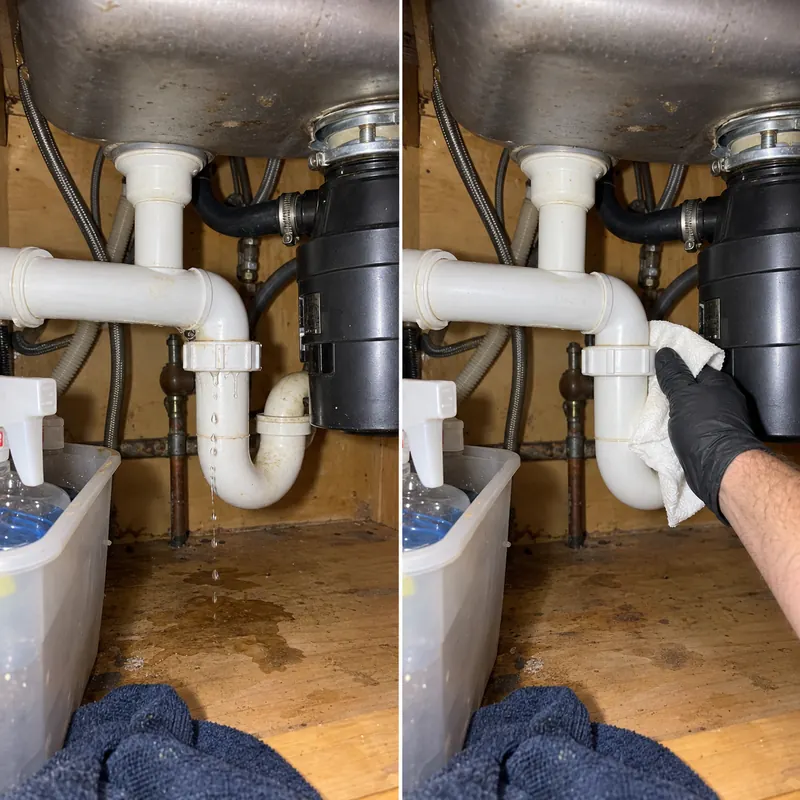
A drip while the faucet is off can involve a pressurized supply hose, shutoff connection, or another water-fed device. Water appearing only when the faucet runs may involve faucet hoses or water passing through the sink deck. Moisture during draining can involve a basket, trap, or waste connection.
These patterns overlap. Splashing, condensation, and water traveling from above can imitate a plumbing leak. Note what happened during normal use rather than repeatedly running water into a growing puddle.
| When water appears | Where to look from a safe position |
|---|---|
| While idle | Visible supply hoses, valves, and upper connections |
| While faucet is used | Faucet underside, hose routes, and sink deck |
| As the basin drains | Drain basket, trap, and visible waste joints |
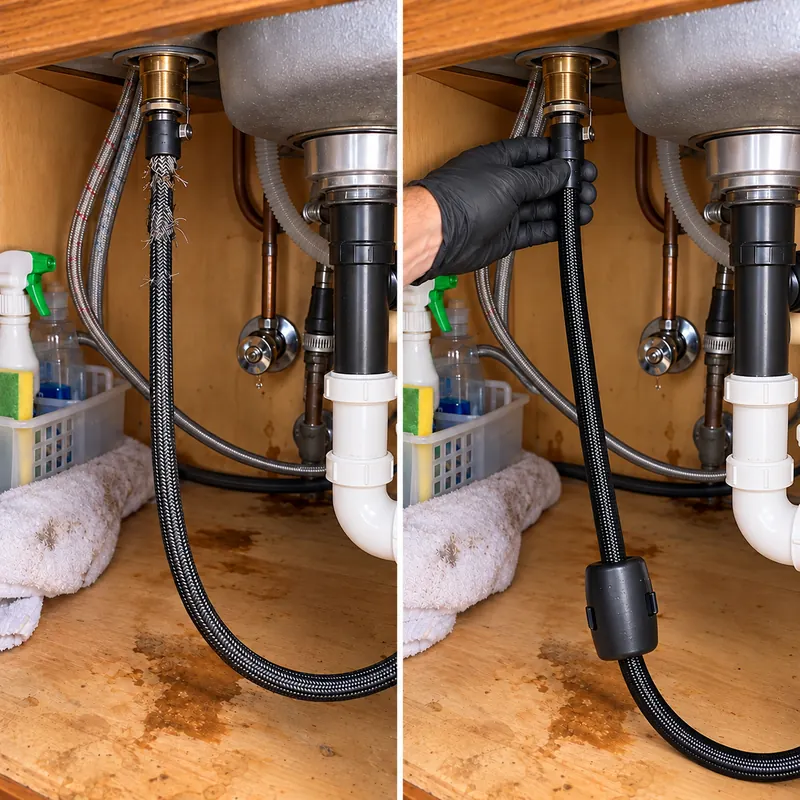
Protect the area without forcing a repair
If the area is safe and the leak is small, move dry stored items away and place a container where it will not contact electrical equipment. Observe visible connections with a light from outside the wet area. Avoid handling a disposal, outlet, or wet appliance.
Use an accessible isolation valve only if you know its purpose and it operates normally. Do not force a stiff valve, tighten fittings blindly, or disconnect a hose. A valve that also leaks may need professional attention. Stop using the sink if continued use adds water.
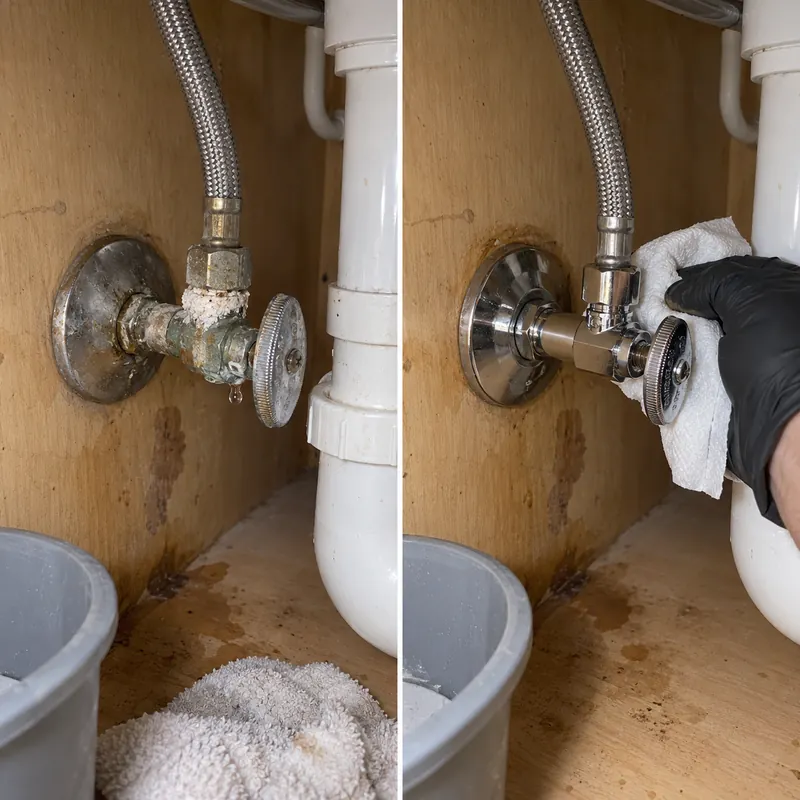
Make the call specific
Describe the timing, highest visible wet point, and whether the cabinet gets wet while idle. Say if the sink also drains slowly or if an appliance line enters the cabinet. Photos taken without reaching into a hazardous area can help show hose routes and access.
Ask whether the visit will assess both supply and waste connections and how any proposed repair will be checked afterward. A dry cabinet immediately after wiping is not evidence that a leak has been resolved.
- Idle, faucet-use, or drain-related moisture?
- Highest visible wet connection, without touching it?
- Any accessible valve already used, and what happened?
- Electrical equipment or stored items near the water?
Related plumbing questions
Sources and equipment instructions
These references support the specific observations and safety boundaries discussed above. Use the manual for your actual equipment; utility ownership and contact rules apply only in that utility’s area.
Calls accepted 24/7. Discuss scheduling, scope, and price before authorizing work.