Why Is the Shower Draining Slowly?
By The Quick Fix Plumbing
A slow shower may involve hair and soap near the drain, but standing water alone does not locate a blockage. The useful first distinction is whether only that fixture is affected or water is behaving unusually elsewhere.
One fixture or a connected pattern?
A shower that empties slowly while nearby sinks and toilets behave normally suggests a more localized restriction. A stopper or strainer can collect debris, but the obstruction may also be farther along the branch. Normal flow elsewhere does not prove the entire line is clear.
Water rising in the shower when a toilet flushes, gurgling at several fixtures, or a backup at a low drain changes the conversation. Those observations can indicate a shared drainage restriction. Stop unnecessary water use rather than repeatedly flushing to test it.
| Observation | Useful next question |
|---|---|
| Only the shower holds water | Is the restriction at the drain opening, trap, or branch? |
| Tub and basin are also slow | Do these fixtures share a restricted branch? |
| Another fixture makes water rise | Does the shared drain or sewer need assessment? |
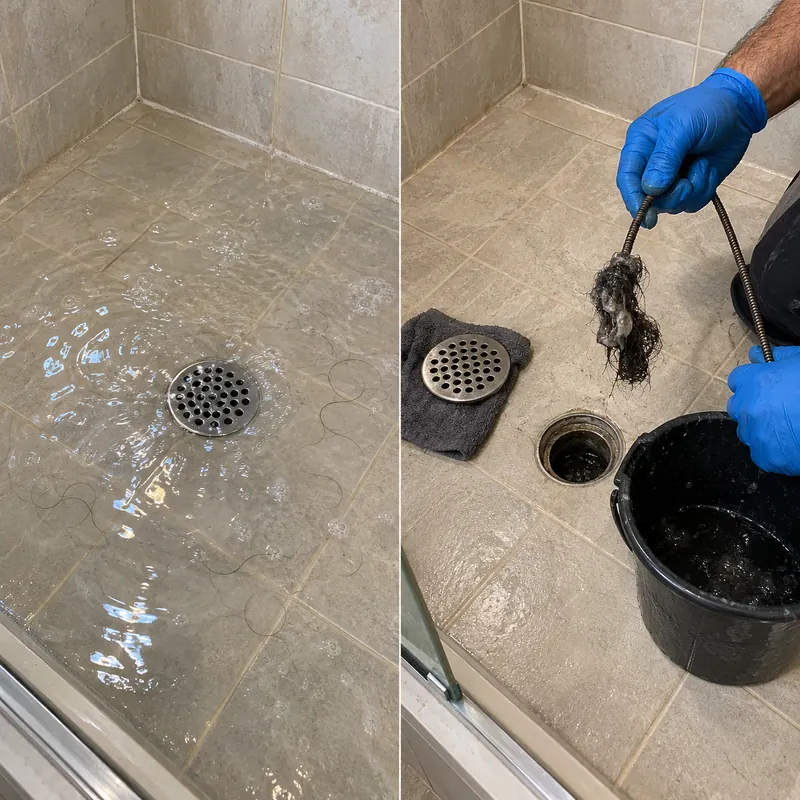
Observe without turning a slow drain into an overflow
If there is no backup, sewage, or chemical already in the drain, you can look at the accessible strainer and note visible hair. Remove only loose surface debris that is safely reachable; do not dismantle unfamiliar plumbing or push a tool into a hidden line.
Do not add or mix chemical drain cleaners. Tell the plumbing professional if any product has already been used, including its name and timing. If water returns from another fixture or smells like sewage, keep people and pets away and stop using the affected fixtures.
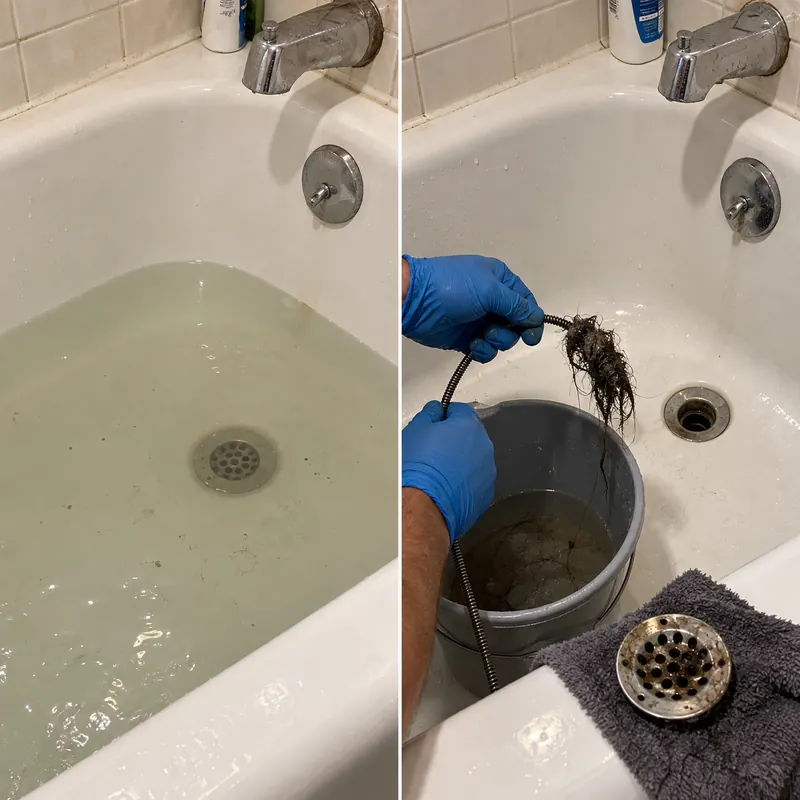
Describe the drainage history
Compare the shower with the tub and basin without deliberately producing a backup. Note whether the symptom began gradually, after a stopper change, or suddenly. An improvement after removing surface hair is useful information, not proof of a complete repair.
- Which fixtures are slow, and which are still normal?
- Does water rise when another fixture is used?
- How long has this happened, and has it returned after cleaning?
- What products or tools have already been used?
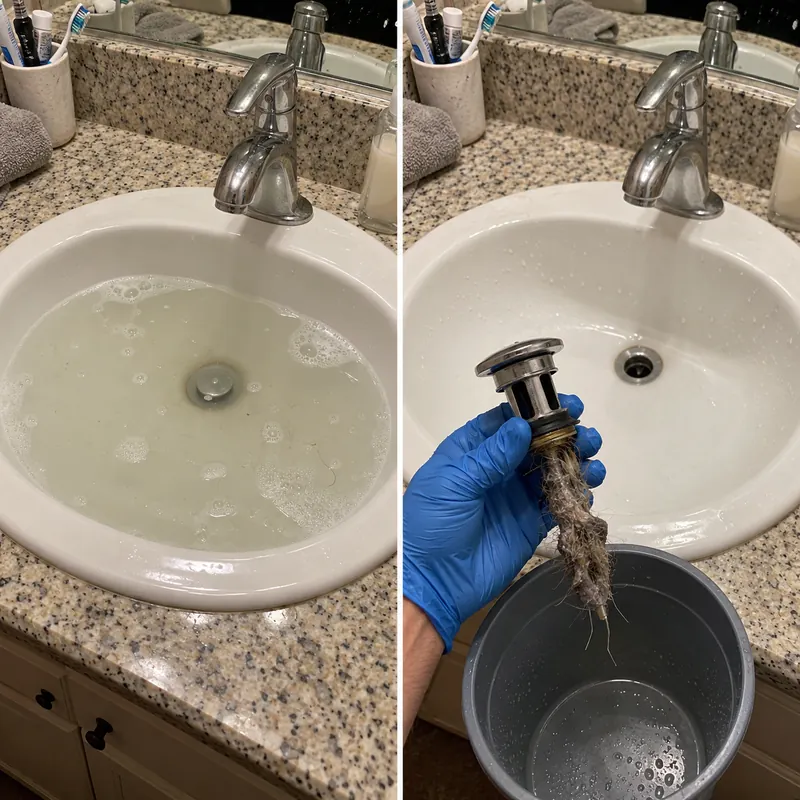
Ask what cleaning will establish
Ask where the suspected restriction is and what access and cleaning method are proposed. If the problem recurs, ask whether further inspection is warranted and what that inspection could or could not show. A single episode does not automatically require a camera, excavation, or pipe replacement.
Related plumbing questions
Sources and equipment instructions
These references support the specific observations and safety boundaries discussed above. Use the manual for your actual equipment; utility ownership and contact rules apply only in that utility’s area.
Calls accepted 24/7. Discuss scheduling, scope, and price before authorizing work.