Why Does the Toilet Keep Refilling?
By The Quick Fix Plumbing
A toilet can run continuously or refill in short bursts between flushes. Both deserve attention, but the sound alone does not tell you which part needs replacing.
Continuous flow versus occasional refill
Continuous running may involve water entering without shutting off or water escaping from the tank. An occasional refill can happen when the tank loses water slowly and the fill valve replaces it. A flapper or seal is a possibility, not the only cause.
If you can safely lift and set aside the lid without straining or dropping it, observe rather than adjust unfamiliar parts. Note whether water appears to enter the overflow tube and whether a handle or chain stays caught after a flush. Do not bend components or force a valve.
| Pattern | Information to share |
|---|---|
| Never stops after a flush | Visible overflow flow or a handle that stays caught |
| Brief refills when nobody flushed | Interval between sounds and any dye reaching the bowl |
| Only one recent occurrence | Whether the handle or normal flush behavior changed |
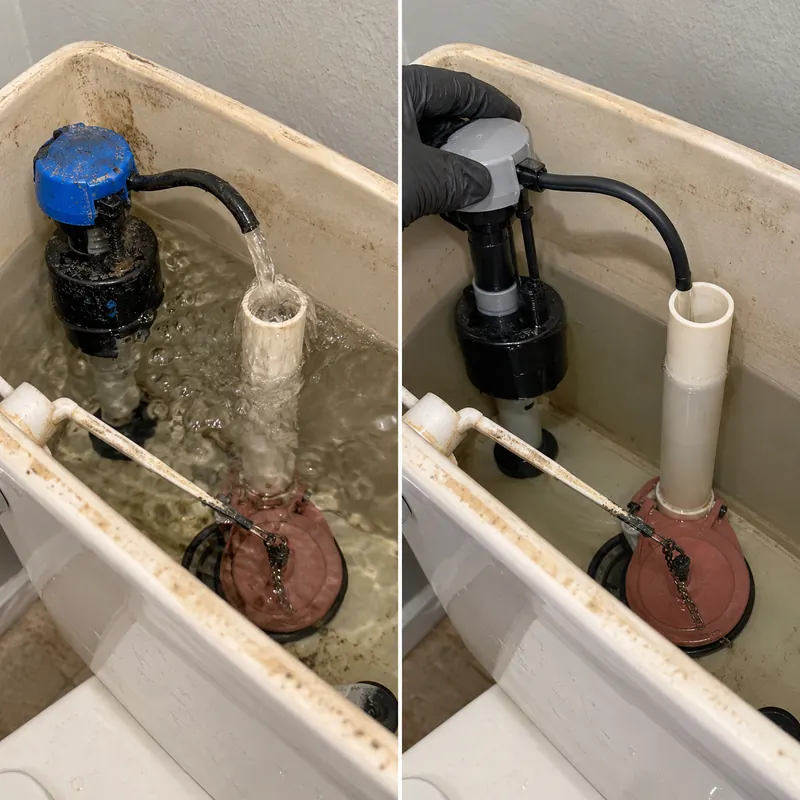
A dye observation can reveal tank-to-bowl leakage
If the toilet is not overflowing and no incompatible chemical is present, EPA WaterSense describes placing a little food coloring in the tank and checking the bowl without flushing. Color reaching the bowl indicates water passing from tank to bowl; it does not identify the exact failed part.
Follow the fixture guidance, avoid dyes that may stain, and flush afterward to clear the coloring. Do not mix cleaners or add a dye test to a tank containing treatment chemicals. If you are unsure what is already there, skip the test and report the refill pattern.
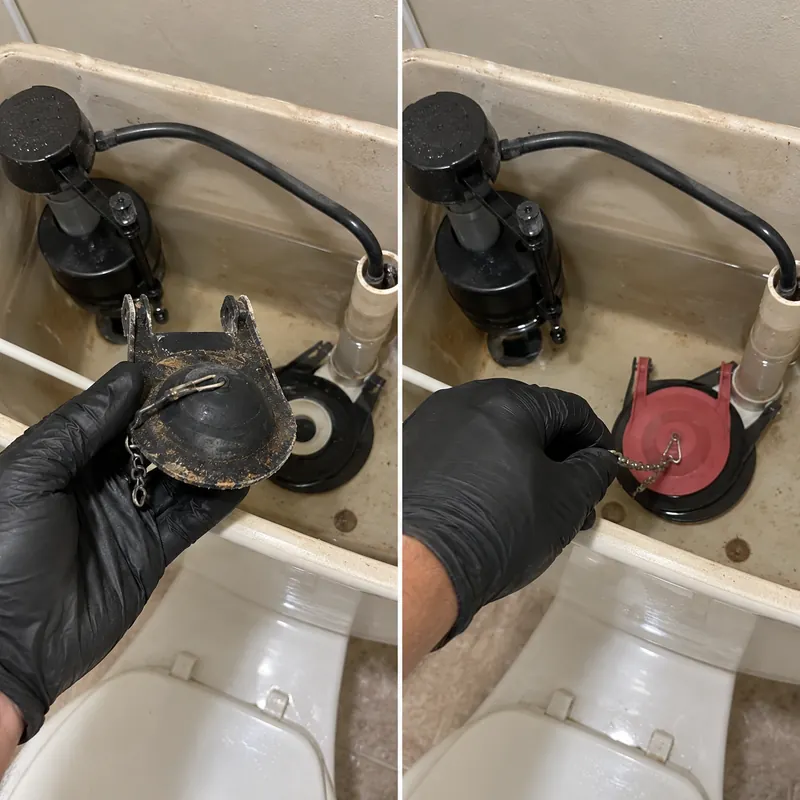
Repair should fit the model and the symptom
Different toilets use different flappers, canister seals, and fill mechanisms. Share the safely visible model information or a photo of the tank interior. A part that looks similar is not necessarily compatible.
Ask which observation supports the proposed part replacement and how the professional will verify the tank holds water and the fill shuts off. If the sound stops but water is leaking outside the toilet, that is a separate problem needing attention.
- Continuous running or intermittent refill?
- Any visible tank-to-bowl dye result?
- Model number or a safely taken photo?
- Recent parts, cleaners, or handle changes?
Related plumbing questions
Sources and equipment instructions
These references support the specific observations and safety boundaries discussed above. Use the manual for your actual equipment; utility ownership and contact rules apply only in that utility’s area.
Calls accepted 24/7. Discuss scheduling, scope, and price before authorizing work.