Supply Hose Warning Signs Worth Reporting
By The Quick Fix Plumbing
A visible hose is only one part of a water supply connection. Its condition, fittings, routing, and isolation valve all matter. A dry-looking hose cannot establish the condition of its inner lining or hidden connections.
Look for condition and routing problems
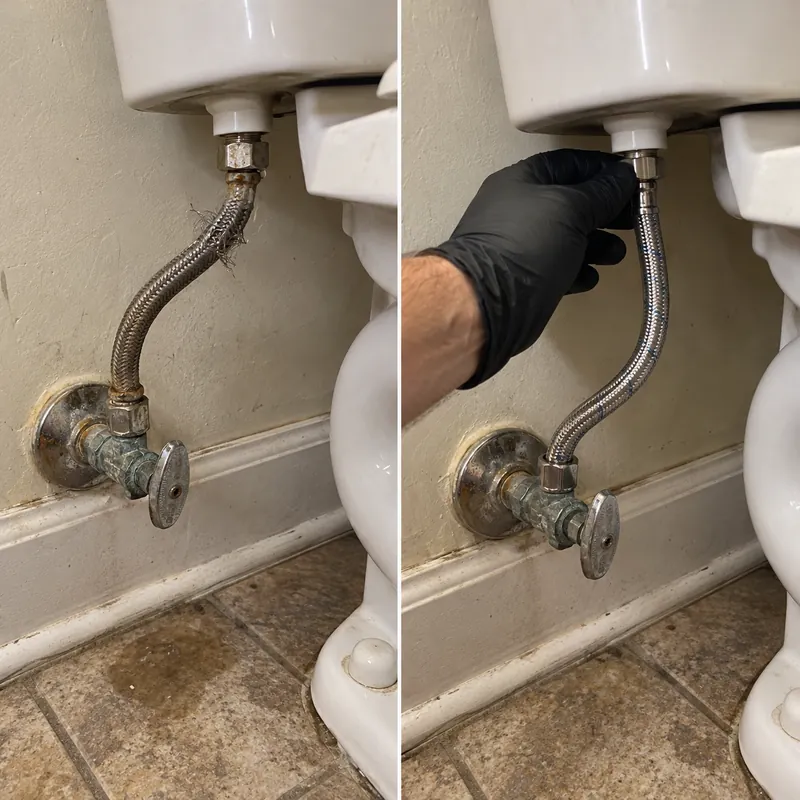
Report bulges, damaged outer braid, fraying, sharp kinks, rubbing, or dampness at either end. Deposits may mark past moisture but do not prove an active leak. Do not bend or squeeze a questionable hose to test it.
For a toilet connection, note whether water is at the valve, hose, tank inlet, or floor. A supply leak can run down to the base and resemble a toilet seal problem. Keep that distinction open until the source is assessed.
Appliance access needs its own plan
Do not drag a washing machine or refrigerator away from a wall if that could strain hoses, damage flooring, or expose wiring. Note whether the water valve is accessible without moving heavy equipment. Report limited clearance before a visit.
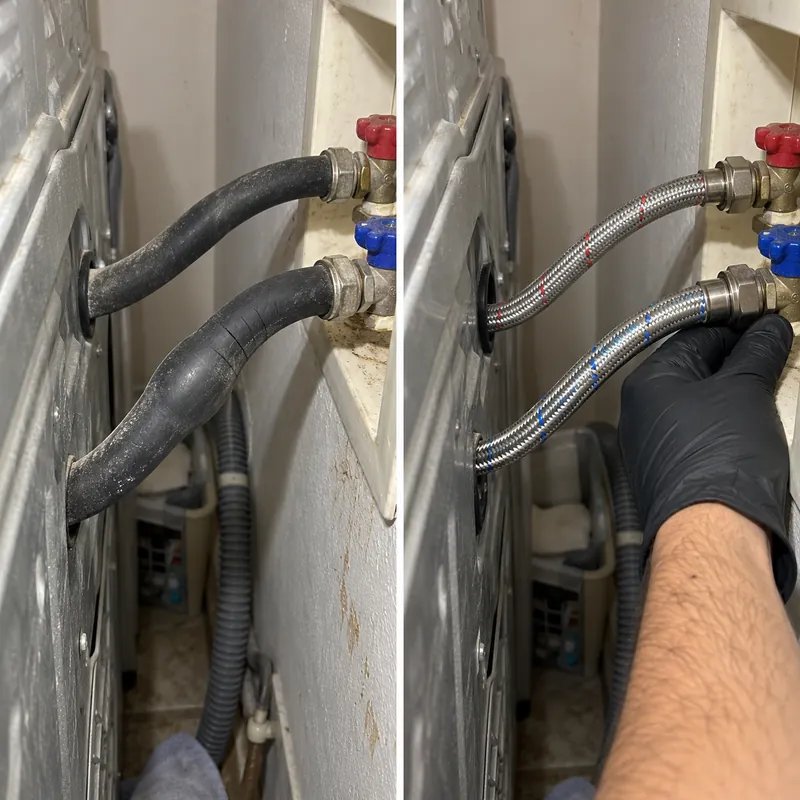
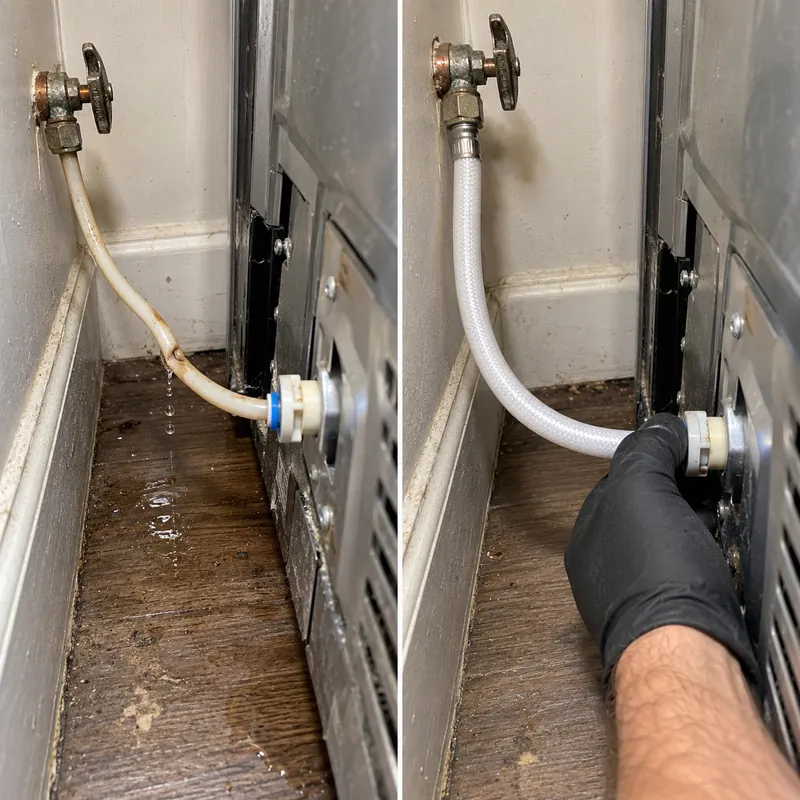
Washing machine hoses may be under pressure even when the appliance is not running. A refrigerator line may be hidden or pinched along its route. If a known accessible water valve turns normally, isolation may reduce water flow; do not force it or operate electrical controls from a wet area.
Ask about compatible replacement and verification
The appropriate hose, connection type, length, and route depend on the fixture or appliance. Follow its actual manual for maintenance and recommended inspection or replacement. Do not use an arbitrary universal interval as proof of safety.
Ask whether the replacement scope includes checking fittings and the shutoff valve, allowing suitable clearance, and checking for leaks under the relevant operating conditions. A new hose alone will not solve every valve or connection problem.
- Fixture or appliance model if safely visible
- Damage or moisture location and when it appeared
- Whether valves and both hose ends are accessible
- Any recent appliance movement or installation
Related plumbing questions
Sources and equipment instructions
These references support the specific observations and safety boundaries discussed above. Use the manual for your actual equipment; utility ownership and contact rules apply only in that utility’s area.
Calls accepted 24/7. Discuss scheduling, scope, and price before authorizing work.