Toilet Leak: Tank, Supply, or Base?
By The Quick Fix Plumbing
Water near a toilet base does not automatically mean the base seal failed. A tank, inlet, bolt connection, or supply hose can leak above it and send water down to the floor.
Start above the puddle
From a safe dry position, look for the highest visible wet point. Water beneath the tank may involve a bolt area, tank-to-bowl connection, supply fitting, or a crack. Timing during idle periods versus after a flush helps describe the pattern.
Do not tighten tank bolts or fittings blindly. Porcelain can crack when overtightened, and a visible crack is not something to patch as a temporary structural repair. If water continues escaping, stop use and isolate the known accessible supply only if its valve operates normally.
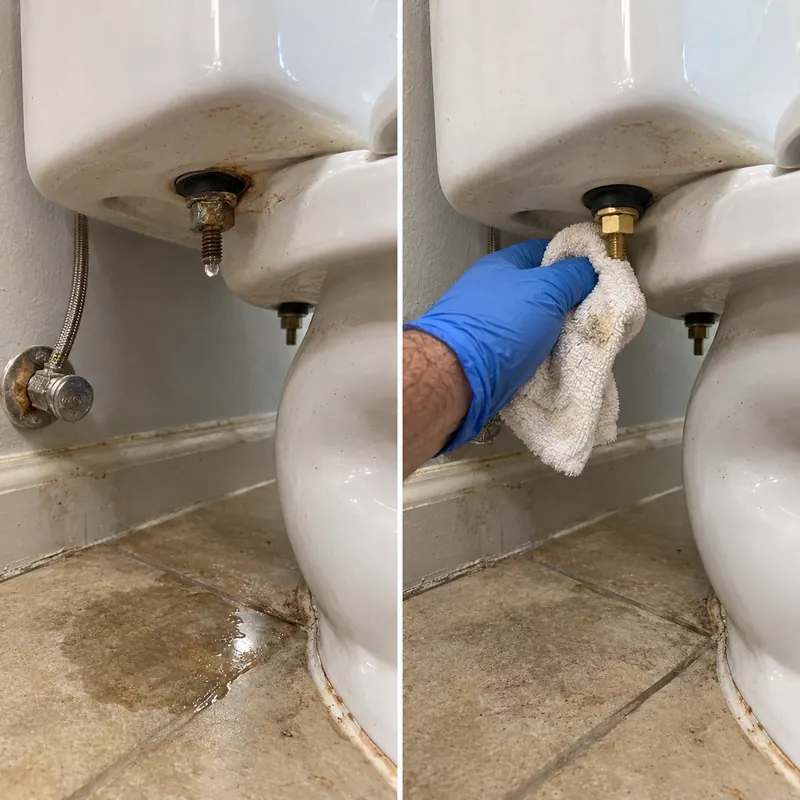
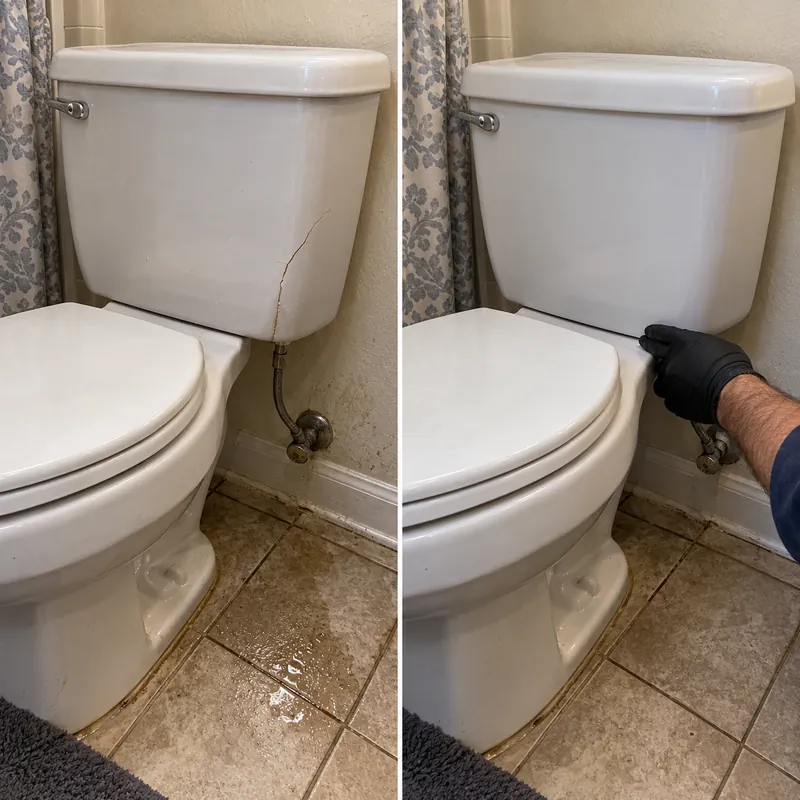
Base moisture and rocking need assessment
Moisture after flushing, rocking, or odor around the base can justify assessment of the seal, flange, mounting, and surrounding floor. None proves that a wax seal alone is the problem. Condensation or a supply leak can also reach the base.
Do not repeatedly flush to reproduce a suspected waste leak, remove the toilet, or use caulk to hide the moisture. A rocking fixture should not be forced back and forth to test it. Report any floor softness from observation without opening the floor.
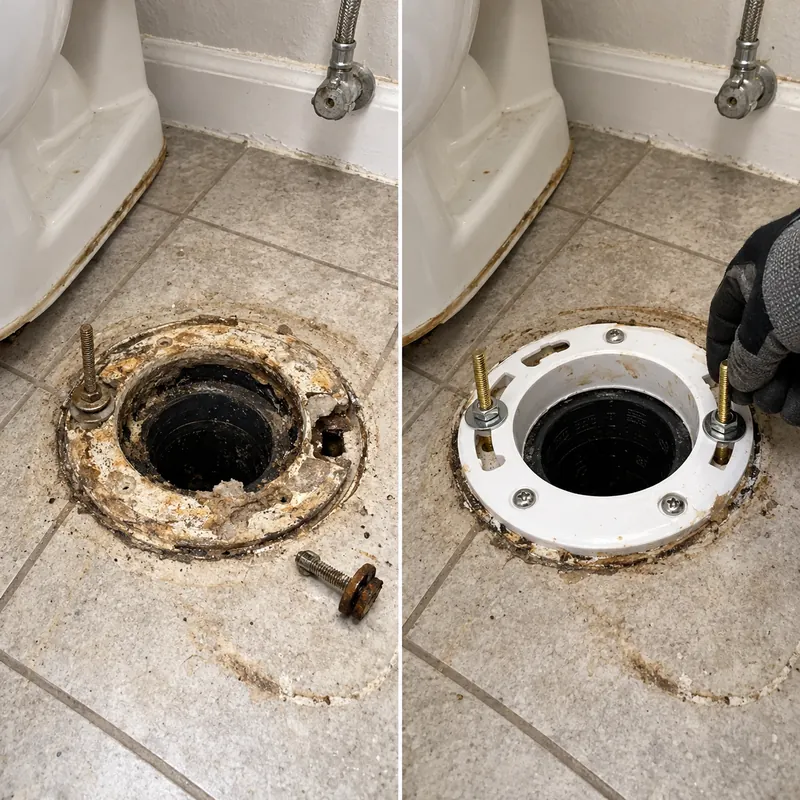
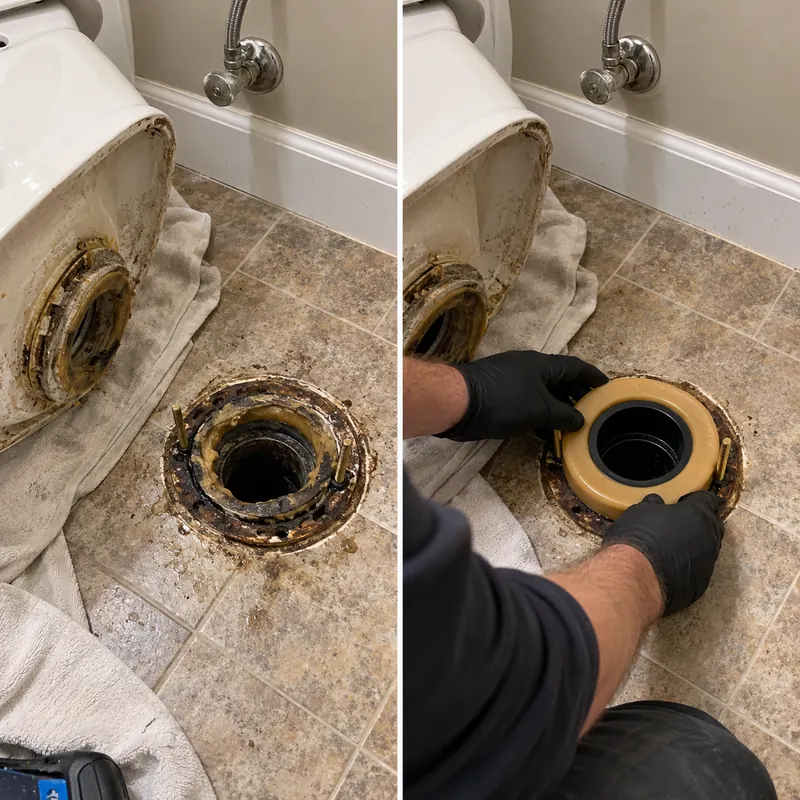
Keep repair scope tied to findings
Ask whether the source is fresh supply water, tank water, or a waste-side connection and what supports that conclusion. If removal is needed, discuss what is included and how hidden damage or additional work will be handled before it is authorized.
A replacement seal will not correct every damaged flange, cracked tank, or floor problem. Ask for an explanation of the findings and the check that will be used after work. Avoid treating a dry floor immediately after wiping as a successful leak test.
| Observation | Assessment question |
|---|---|
| Wet at tank bolt area | Is the connection leaking, or is water arriving from above? |
| Wet floor after flushing | Where does water first emerge, and is the waste connection involved? |
| Crack or rocking | Is the fixture or mounting unsafe to keep using? |
- Highest visible moisture point
- Idle versus flush-related timing
- Any crack, odor, rocking, or floor change
- Known valve access and any attempted adjustments
Related plumbing questions
Sources and equipment instructions
These references support the specific observations and safety boundaries discussed above. Use the manual for your actual equipment; utility ownership and contact rules apply only in that utility’s area.
Calls accepted 24/7. Discuss scheduling, scope, and price before authorizing work.