Water Leak & Pipe Repair in Lancaster, PA
A dripping joint under a cabinet, a stain spreading across a ceiling, or a water bill that climbed without explanation? Call 24/7 and describe the leak in Lancaster.
Call 24/7 to request plumbing help.

- Calls accepted 24/7Call lines are available at any hour, any day. Answer times may vary.
- Selected communitiesCoverage is checked by location on the call before anything is scheduled.
- Common household problemsLeaks, drains, sewer lines, water heaters, toilets and fixtures.
- Scope and pricing firstDiscuss the work and the price with the provider before authorizing anything.
Leaks and Pipe Problems We Help With
Visible leaks, hidden leaks behind walls or under floors, burst pipes and water-line trouble.
Leaking Pipes
Drips at joints, corroded sections and slow leaks under sinks or in cabinets.
Hidden Water Leaks
Leaks inside walls, ceilings or under slabs that show up as damp spots or a rising water bill.
Burst Pipes
Failed supply lines and split pipes that need the water shut off and the section repaired.
Water-Line Problems
Main or branch water-line issues, including lines that lose pressure or leak underground.
Leak Detection
Help tracing where water is actually coming from before anything gets opened up.
Stains and Low Pressure
Water stains, unexplained moisture, musty smells or reduced water pressure at fixtures.
Signs of a Leak You Cannot See
Hidden leaks rarely announce themselves. These are the signs worth a call before the damage works into drywall, flooring or a basement.
- Your water bill jumped without a change in household use.
- A wall, ceiling or baseboard has a spreading stain or feels soft.
- There is a damp patch on the floor or a warm spot on a slab.
- Water pressure dropped at several fixtures at once.
- The water meter keeps moving with every fixture turned off.
- You smell musty air near a cabinet, closet or crawlspace.
What to Do Right Now
- 1Shut off the nearest fixture valve or the main water supply when it is safe to do so.
- 2Keep people and pets away from sewage or contaminated water.
- 3Do not touch electrical devices, outlets or panels near standing water.
- 4If you suspect a gas leak, leave the property and contact emergency services or the gas utility.
- 5Call and explain the symptoms and the location in the home.
Do not attempt repairs you are not comfortable with. Describe what you are seeing on the call instead.
Possible Contributing Factors
These are possible contributing factors, not a diagnosis — the cause is confirmed on site.
- Older plumbing systems can sometimes have aging pipe materials or corroded fittings.
- Water heaters and main plumbing may be located in basements, crawlspaces or utility spaces, which affects access and how a leak is noticed.
- Freezing weather can damage exposed pipes, hose bibbs and lines in unheated spaces such as garages or crawlspaces.
- Trees and roots can contribute to sewer-line problems on any established lot.
- Water quality and mineral buildup can affect fixtures, valves and water-heater life over time.
- Heavy rain can overload storm and sewer systems in any area.
Lancaster-Area Coverage
Coverage is focused on Lancaster and nearby communities. Calls are accepted 24/7 and the exact address and service needed are confirmed on the call.
- Lancaster
- Lancaster Township
- Manheim Township
- East Hempfield
- Millersville
- Lititz
- Surrounding communities
How It Works
- 1Call and describe the plumbing problem.
- 2Provide the property location so service availability can be checked.
- 3Discuss the proposed scope, provider credentials, pricing and terms before authorizing work.
More Plumbing Help in Lancaster, PA
- Drain cleaning & sewer helpDrain cleaning and clearing for slow sinks, repeat clogs, main-line blockages and sewer backups.
- Water heater repair & installationRepair, replacement and new installation for tank and tankless units — routine jobs included.
- Toilets, faucets & shower valvesToilet repair and installation, faucet repair and replacement, and shower valve repair — small jobs included.
- All plumbing servicesOne call for drains, leaks, sewer and water lines, water heaters, toilets and fixtures.
- Lancaster, PA plumbing helpStart with the main Lancaster, PA page for any plumbing problem.
Frequently Asked Questions
Confirm pricing, service details and the scope of work directly with the plumbing professional before work begins.
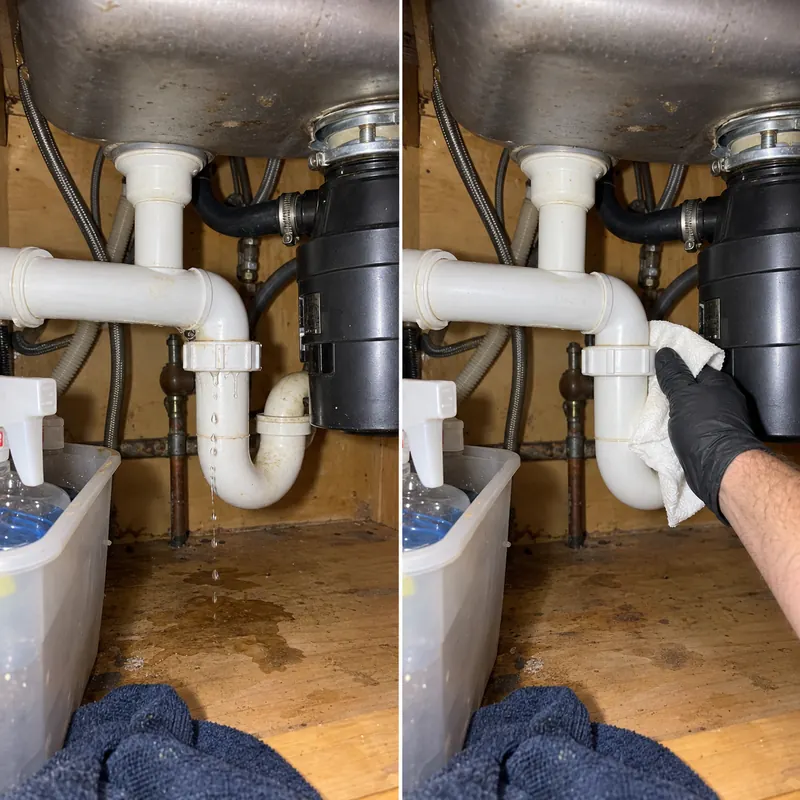
The cabinet gets wet only as the basin drains
Drain-related timing can point the inspection toward waste connections without proving the faulty joint.
Separate emptying the basin from turning on the faucet
Water seen during draining may involve the basket, trap, waste joint, or water tracking from above. A pressurized supply leak can occur while idle, and splashing can complicate either pattern.
Describe what happened during normal use rather than filling the basin again as a test. Stop using it if draining adds water to the cabinet, especially near a disposal, outlet, or appliance connection.
Capture accessible evidence without disturbing fittings
A photo from a dry safe position can show the highest wet point and visible pipe route. Do not reach into wet electrical areas, remove a trap, or tighten joints blindly to prepare for the call.
Ask whether the assessment will trace both waste and supply routes and how the repair will be checked under the relevant operating condition. Note any recent basket, faucet, or cabinet plumbing work.
- Moisture during draining, faucet use, or idle?
- Highest visible wet point and appliance hazards?
- Recent work and safely available photos?