Drain Cleaning & Sewer Help in Ocala, FL
Drain cleaning and sewer help in Ocala: a sink holding water, a shower draining slowly, or waste water rising at the lowest drain in the house. Call 24/7.
Call 24/7 to request plumbing help.
- Calls accepted 24/7Call lines are available at any hour, any day. Answer times may vary.
- Selected communitiesCoverage is checked by location on the call before anything is scheduled.
- Common household problemsLeaks, drains, sewer lines, water heaters, toilets and fixtures.
- Scope and pricing firstDiscuss the work and the price with the provider before authorizing anything.
Drain and Sewer Problems We Help With
Slow fixtures, repeat clogs, main-line restrictions and sewer backups at Ocala addresses.
Clogged Sinks, Tubs and Showers
Standing water and blockages from grease, hair, soap buildup or foreign objects.
Slow Drains
Drains that empty a little slower every week — usually a partial blockage, not a full clog.
Repeated Blockages
The same drain clogging again after clearing, which often points further down the line.
Overflowing Drains and Toilets
Water coming back up out of a fixture instead of draining away.
Sewer Backups
Waste water surfacing at the lowest drain in the home, sometimes with odor.
Main and Sewer-Line Problems
Main-line blockages, root intrusion and sewer-line issues that need drain clearing or cleaning.
Single Fixture or Shared Line?
One slow fixture usually means a local restriction. Several affected together, or backups at the lowest drain, points further along the system.
- More than one drain in the home is slow or backing up at the same time.
- A drain gurgles when another fixture is used.
- Waste water appears at a floor drain, shower or laundry standpipe.
- A clog returns within days of being cleared.
- There is a sewer odor indoors or near a cleanout.
- Drain problems get worse after heavy rain.
What to report from normal use
Describe which fixtures have been slow or gurgling during ordinary use of the home, which was worst, and whether anything coincided with an appliance draining. If only the kitchen sink is slow, the restriction may be local to that trap or branch. If a tub gurgled while the washer emptied, or the lowest drain rose when a toilet was flushed, a restriction further downstream is possible.
If sewage or water is backing up, stop using connected fixtures and water-using appliances and call. Persistent odor with slow drainage is worth mentioning too, since venting can be involved as well as blockage.
Wet weather as a possible factor
Drain symptoms are sometimes first noticed during heavy rain, because a partly restricted line has less spare capacity when there is more water in the system. That is a possible contributing factor rather than a diagnosis — the actual restriction is identified on site.
If the timing is weather-related, say so, along with which fixtures were affected and how long it took to settle. It is genuinely useful information when the line is inspected.
How the work is scoped
Where the cleanout sits, how far along the restriction is and what the line is made of shape the visit. An accessible branch under a sink is a different scope from a concealed or buried lateral entered from outside, and a camera inspection is sometimes suggested when a clog returns to the same place.
Have ready: how many fixtures are affected, how often it recurs, whether there is indoor odor, and whether the property is on the city sewer or a septic system.
Possible Contributing Factors
These are possible property factors, not a diagnosis — the cause is confirmed on site.
- Drain symptoms are sometimes first noticed in wet weather, when a partly restricted line has less spare capacity.
- Slab foundations are common and can hide a supply leak until it shows as damp flooring or higher water use.
- Humidity and warmth make it harder to tell condensation from a genuine leak without a closer look.
- Older homes may have mixed pipe materials from past repairs, which can leak where two materials meet.
- Mineral content in the water can scale fixtures, valves and water-heater tanks over years of service.
- Mature landscaping and root growth can contribute to sewer-line blockages on established lots.
Ocala Coverage
Coverage is for plumbing work at Ocala addresses. Calls are accepted 24/7 and the exact address and service needed are confirmed on the call.
- Ocala
How It Works
- 1Call 24/7 and describe the plumbing problem.
- 2Provide the property location and the service needed.
- 3Discuss the proposed scope, pricing and terms before authorizing work.
More Plumbing Help in Ocala, FL
- All plumbing servicesDrains and waste lines, supply pipework, water heaters, toilets, faucets, valves and outdoor taps.
- Water leak & pipe repairVisible drips, concealed leaks, suspected slab leaks, outdoor supply lines and burst pipes.
- Water heater repair & installationRepair, replacement and installation for tank and tankless units, urgent or planned.
- Toilets, faucets & shower valvesToilet repair and installation, faucet repair and replacement, shower valve repair and shutoffs.
- Ocala, FL plumbing helpStart with the main Ocala, FL page for any plumbing problem.
Frequently Asked Questions
Confirm pricing, service details and the scope of work directly with the plumbing professional before work begins.
Sewage odor and intermittent gurgling
Describe smell, drainage, and returning water separately; odor alone cannot diagnose an obstruction.
Record the cross-fixture history
Note where the odor is noticed, which fixture gurgles, and whether the sound follows use elsewhere. Include unused fixtures and any recent plumbing work as context. Odor can have several sources, and gurgling does not reveal the exact location or cause of a restriction.
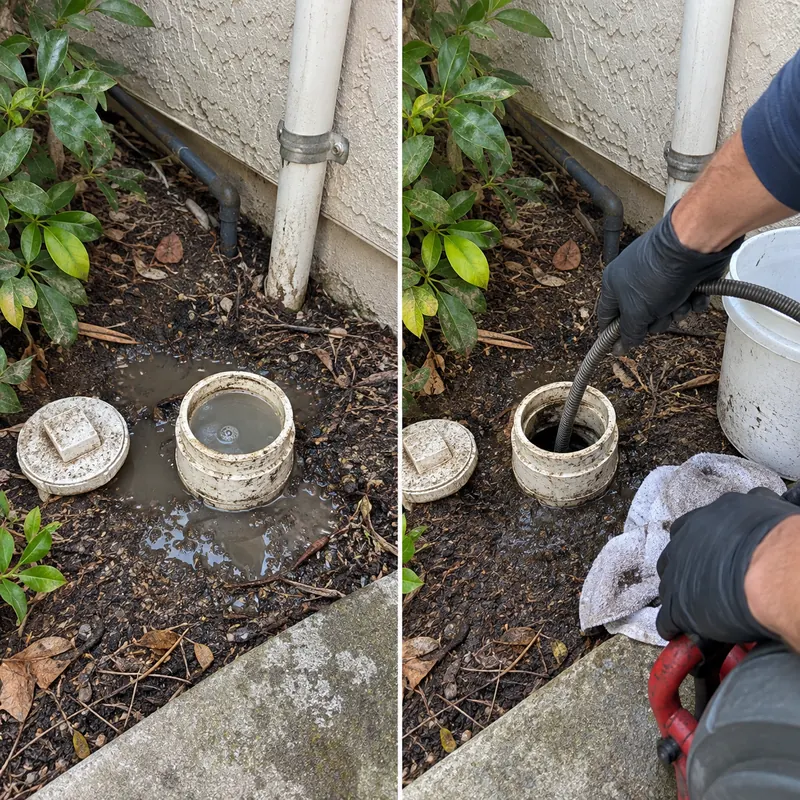
If wastewater actually rises into a fixture, stop unnecessary water use and keep people away from contamination. Do not flush again to see what happens, open a cleanout, or add chemicals. The outdoor access illustration shows a professional inspection context, not a safe do-it-yourself opening procedure.
Ask what distinguishes odor investigation from clearing
Tell the professional whether drainage remains normal between episodes and whether several fixtures are involved. Ask which checks are needed to distinguish a fixture/trap issue from a shared drainage or venting concern.
If cleaning is recommended, ask what evidence supports it and what follow-up applies if the odor persists after flow improves. If inspection is proposed, request the area examined and any limitations. Masking the smell is not the same as resolving the confirmed source.
- Odor only, gurgling, slow drainage, or actual backup?
- Which other fixture was in use?
- Source checks and follow-up after cleaning?