Toilet, Faucet & Shower Valve Repair in Grand Junction, CO
Toilet, faucet and shower valve repair in Grand Junction: a toilet that refills itself, weak flow at one tap, a persistent drip or a shutoff that seized. Call 24/7.
Call 24/7 to request plumbing help.
- Calls accepted 24/7Call lines are available at any hour, any day. Answer times may vary.
- Selected communitiesCoverage is checked by location on the call before anything is scheduled.
- Common household problemsLeaks, drains, sewer lines, water heaters, toilets and fixtures.
- Scope and pricing firstDiscuss the work and the price with the provider before authorizing anything.
Toilet, Faucet and Shower Work We Can Help With
Toilet repair and installation, faucet repair and replacement, shower valves and shutoffs.
Toilet Repair Service
Weak flush, a handle that has to be held, a rocking bowl or a leak at the base or tank bolts.
Running or Leaking Toilets
A toilet that refills on its own, hisses between flushes or seeps water onto the floor.
Toilet Installation Service
Swapping an old toilet for a new one, including comfort-height and low-flow models.
Faucet Repair
Dripping spouts, worn cartridges, loose handles and leaks at the base of a kitchen or bath faucet.
Faucet Replacement Service
Fitting a new kitchen, bathroom or laundry faucet, plus supply lines and shutoff valves.
Shower Valve Repair
Cartridge and mixing-valve problems behind the wall, plus tub spout and diverter trouble.
Small Faults That Add Up
Fixture problems are easy to live with and quietly waste water. These are the ones worth a call.
- A toilet keeps running or refilling on its own.
- There is water on the floor around the toilet base.
- A faucet drips no matter how hard you close it.
- A shower handle spins, sticks or will not hold temperature.
- A shutoff valve under a sink or toilet will not close.
- You are replacing a toilet, faucet or shower trim and want it fitted properly.
Weak flow at one fixture
When flow is poor at a single tap and fine elsewhere, the cause is usually local: a restricted aerator, a worn or blocked cartridge, or a supply valve that is not fully open. Mineral deposits can contribute over time, and it is checked at the fixture itself.
Say whether it affects hot, cold or both. Hot-only weakness at one tap can involve the fixture or the hot supply to it, which is a different check from a cold-side restriction.
Repair or replace the fixture
Most toilets and faucets fail at a part rather than the fixture: a flapper, fill valve, cartridge or supply line. Those are ordinary repairs. Replacement is the better conversation when the body is cracked, the bowl rocks on a failed flange, or parts for the model are unavailable.
If you already have a replacement fixture on hand, mention it; if you would rather it be supplied, describe the style you want so the visit can be scoped accordingly.
Before the visit
Check whether the shutoff under the sink or behind the toilet closes. Seized shutoffs are common in older homes and often become part of the job, so knowing in advance helps.
For a shower valve, note whether the handle spins freely, sticks or mixes unevenly, and whether an access panel exists behind the wall. That decides whether the trim comes off the front or the valve is reached from behind.
Possible Contributing Factors
These are possible property factors, not a diagnosis — the cause is confirmed on site.
- Older sewer laterals in clay or cast iron can be more prone to root intrusion and repeat clogs.
- Aging supply pipe and corroded fittings can weep at joints long before a visible drip appears.
- Slab-built homes can conceal a supply leak until moisture, a warm floor spot or unexplained water use appears.
- Mineral deposits can restrict aerators, cartridges and valves, and can scale a water-heater tank over time.
- Winter cold can split exposed pipes, hose bibbs and lines in unheated spaces.
- Ground movement over the years can stress buried supply and drain lines.
Grand Junction Coverage
Coverage is for plumbing work at Grand Junction addresses. Calls are accepted 24/7 and the exact address and service needed are confirmed on the call.
- Grand Junction
How It Works
- 1Call 24/7 and describe the plumbing problem.
- 2Provide the property location and the service needed.
- 3Discuss the proposed scope, pricing and terms before authorizing work.
More Plumbing Help in Grand Junction, CO
- All plumbing servicesDrains and waste lines, supply pipework, water heaters, toilets, faucets, valves and outdoor taps.
- Drain cleaning & sewer helpSlow fixtures, repeat clogs, main-line restrictions and sewer backups at Grand Junction addresses.
- Water leak & pipe repairVisible drips, concealed leaks behind walls or under floors, suspected slab leaks and outdoor lines.
- Water heater repair & installationRepair, replacement and installation for tank and tankless units, urgent or planned.
- Grand Junction, CO plumbing helpStart with the main Grand Junction, CO page for any plumbing problem.
Frequently Asked Questions
Confirm pricing, service details and the scope of work directly with the plumbing professional before work begins.
A toilet rocks without a visible leak
Movement deserves a mounting assessment even when the floor looks dry.
Observe movement without testing the mounting
Record when movement was first noticed and whether it followed installation, floor work, or another repair. Do not rock the toilet deliberately or tighten the bolts to hide the symptom. Porcelain can be damaged by overtightening, and movement alone does not identify a failed seal.
Look from a safe position for floor moisture or staining and note whether the toilet remains usable without movement. A dry floor does not confirm the condition beneath the base. The flange illustration is an example of a possible mounting issue, not proof that the flange needs replacement.
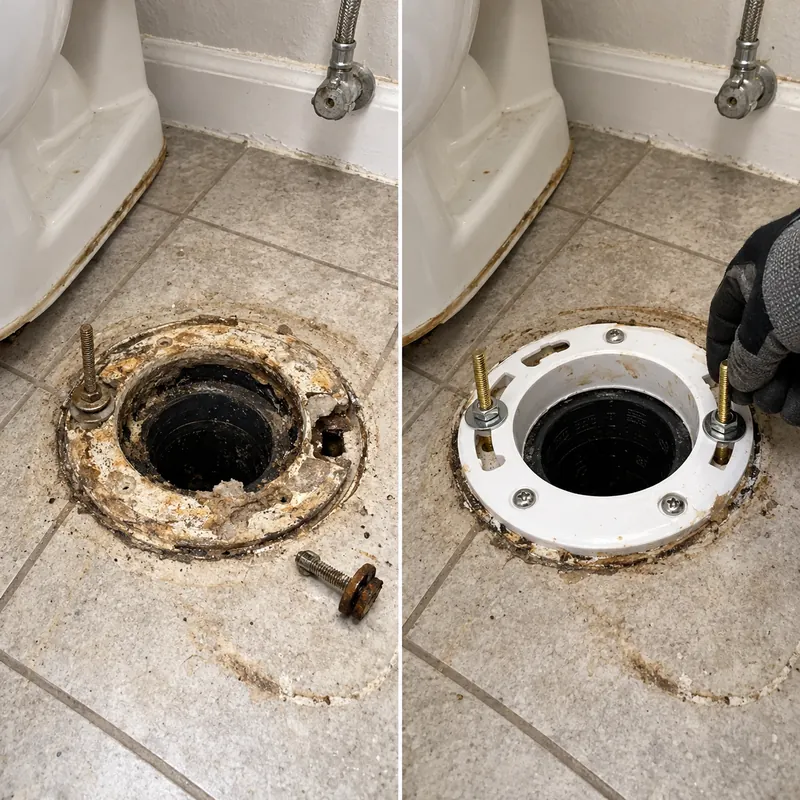
Ask for support and flange confirmation
Ask how the professional will assess floor support, mounting, and the flange connection before selecting a repair. If removal is necessary, agree what findings will be photographed and what additional work would require your approval.
Distinguish stabilizing the fixture from repairing a confirmed damaged connection or floor. Include compatible sealing and a normal-use leak check in the agreed scope. If wastewater appears or the fixture feels unstable, stop using it and describe that change when arranging help.
- Movement began after which event?
- Moisture, staining, or unsafe instability?
- Floor support, flange finding, and sealing scope?