Water Leak & Pipe Repair in Grand Junction, CO
Water leak and pipe repair in Grand Junction: a weeping joint under a cabinet, a damp patch on a floor, or water use that climbed with no change in habits. Call 24/7.
Call 24/7 to request plumbing help.

- Calls accepted 24/7Call lines are available at any hour, any day. Answer times may vary.
- Selected communitiesCoverage is checked by location on the call before anything is scheduled.
- Common household problemsLeaks, drains, sewer lines, water heaters, toilets and fixtures.
- Scope and pricing firstDiscuss the work and the price with the provider before authorizing anything.
Leaks and Pipe Problems We Help With
Visible drips, concealed leaks behind walls or under floors, suspected slab leaks and outdoor lines.
Leaking Pipes
Drips at joints, corroded sections and slow leaks under sinks or in cabinets.
Hidden Water Leaks
Leaks inside walls, ceilings or under slabs that show up as damp spots or a rising water bill.
Burst Pipes
Failed supply lines and split pipes that need the water shut off and the section repaired.
Water-Line Problems
Main or branch water-line issues, including lines that lose pressure or leak underground.
Leak Detection
Help tracing where water is actually coming from before anything gets opened up.
Stains and Low Pressure
Water stains, unexplained moisture, musty smells or reduced water pressure at fixtures.
Leak Signs That Are Easy to Miss
Most leaks are noticed by a side effect rather than by seeing water. These are the signs worth a call.
- Your water bill jumped without a change in household use.
- A wall, ceiling or baseboard has a spreading stain or feels soft.
- There is a damp patch on the floor or a warm spot on a slab.
- Water pressure dropped at several fixtures at once.
- The water meter keeps moving with every fixture turned off.
- You smell musty air near a cabinet, closet or crawlspace.
Building the case before anything is opened
With every fixture, water-using appliance and any automatic irrigation, water softener or ice-maker refill cycle switched off, steady movement at the water meter may indicate a leak on the supply side. Note whether damp grows only after hot water is used, only after a shower, or continuously — each points at a different line.
Photograph the affected area with something for scale and note the date. Two photographs a day apart tell a plumbing professional more about the rate of loss than a description does.
Suspected leaks under a slab
In slab-built homes a supply leak can stay hidden for a long time, showing up as unexplained water use, a warm area on the floor if it is on the hot line, or damp appearing at the edge of flooring. None of those confirm a slab leak on their own; they are the symptoms that make it worth checking.
Say what flooring is in the affected area and whether the damp has moved. Access work is always discussed and agreed with you before anything is opened.
What changes the repair scope
A pinhole on an accessible run is short work. The same failure inside a wall, under a slab or on a buried line between the meter and the house involves access, and that changes the scope and the price, both agreed before work starts.
Pipe history matters as well. Where several repairs have already been made along one run, replacing a section is sometimes the more sensible option to discuss instead of another patch.
What to Do Right Now
- 1Shut off the nearest fixture valve or the main water supply when it is safe to do so.
- 2Keep people and pets away from sewage or contaminated water.
- 3Do not touch electrical devices, outlets or panels near standing water.
- 4If you suspect a gas leak, leave the property and contact emergency services or the gas utility.
- 5Call and explain the symptoms and the location in the home.
Do not attempt repairs you are not comfortable with. Describe what you are seeing on the call instead.
Possible Contributing Factors
These are possible property factors, not a diagnosis — the cause is confirmed on site.
- Older sewer laterals in clay or cast iron can be more prone to root intrusion and repeat clogs.
- Aging supply pipe and corroded fittings can weep at joints long before a visible drip appears.
- Slab-built homes can conceal a supply leak until moisture, a warm floor spot or unexplained water use appears.
- Mineral deposits can restrict aerators, cartridges and valves, and can scale a water-heater tank over time.
- Winter cold can split exposed pipes, hose bibbs and lines in unheated spaces.
- Ground movement over the years can stress buried supply and drain lines.
Grand Junction Coverage
Coverage is for plumbing work at Grand Junction addresses. Calls are accepted 24/7 and the exact address and service needed are confirmed on the call.
- Grand Junction
How It Works
- 1Call 24/7 and describe the plumbing problem.
- 2Provide the property location and the service needed.
- 3Discuss the proposed scope, pricing and terms before authorizing work.
More Plumbing Help in Grand Junction, CO
- All plumbing servicesDrains and waste lines, supply pipework, water heaters, toilets, faucets, valves and outdoor taps.
- Drain cleaning & sewer helpSlow fixtures, repeat clogs, main-line restrictions and sewer backups at Grand Junction addresses.
- Water heater repair & installationRepair, replacement and installation for tank and tankless units, urgent or planned.
- Toilets, faucets & shower valvesToilet repair and installation, faucet repair and replacement, shower valves and shutoffs.
- Grand Junction, CO plumbing helpStart with the main Grand Junction, CO page for any plumbing problem.
Frequently Asked Questions
Confirm pricing, service details and the scope of work directly with the plumbing professional before work begins.
Water appears only during appliance use
The stage of the cycle can help distinguish supply connections from drainage, without requiring another test cycle.
Log the cycle stage already observed
Describe whether water appeared as the appliance filled, ran, or emptied, and where the first wet point was visible. A laundry supply hose can leak independently of a drain connection; water from either can spread to the same floor area.
Stop using the affected appliance rather than repeating a cycle to reproduce the leak. Photograph accessible hose connections from a dry position, but do not pull a heavy machine forward, reach behind wet electrics, or detach a hose. Use only a known normally operable shutoff that is safely accessible.
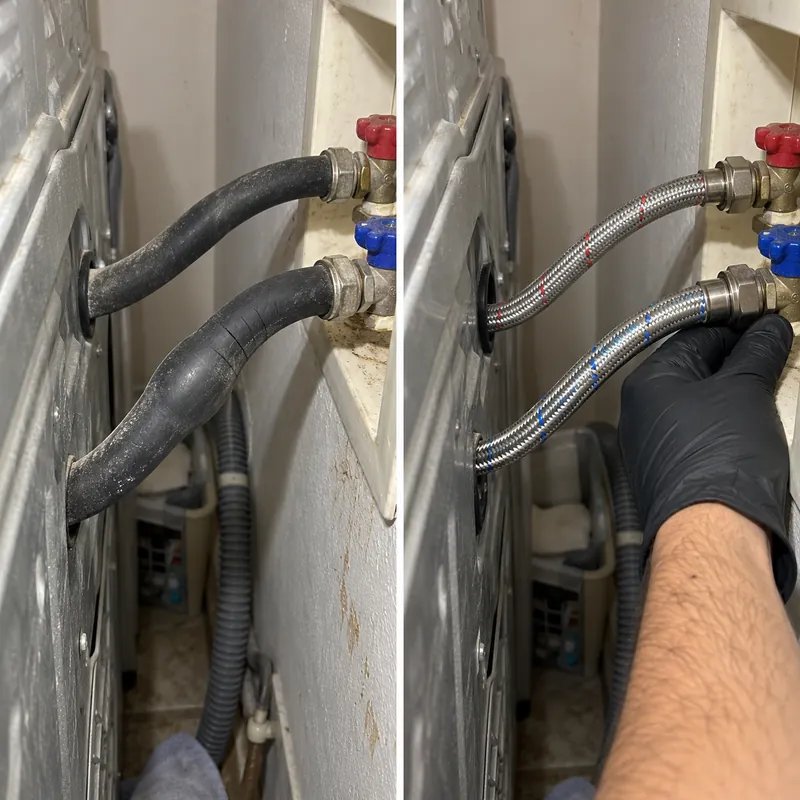
Define appliance and plumbing checks separately
Provide the model, cycle stage, recent installation history, and whether wetness persists after use stops. Ask which supply, drain, or appliance connection the assessment will check first and whether appliance service is also needed.
A hose replacement should include compatible connections and routing, not just a new length of hose. A drainage repair requires its own finding. Confirm safe access and who will move equipment if required before approving work behind the appliance.
- Filling, washing, or draining when water appeared?
- Highest accessible wet point and stop-use status?
- Supply/drain scope and safe appliance access?